Wednesday, July 1, 2015

West German Rifle Cleaning Kits: Reinigungsgerät 34 Rg34, Rg. f. Gew. , circa 1960's, Bundeswehr, Bereitschaftspolizei Berlin, Bundesgrenzschutz

Today we'll be taking a look at a trio of old, Post-War, West German rifle cleaning kits. 


These kits are often called referred to as "tobacco tin cleaning kits" in the US, due to the fact that they appear very similar to the old smoking tobacco tins.


The official name for these kits is Reinigungsgerät 34, abbreviated as Rg34.  The original versions of these German kits began production in 1934 and ran through to the end of WW2, 1945.  It seems that there was a break of about 10 years, between the end of the war, and when production was resumed in West Germany.
I have not found any information that pins down the exact dates the Post-War kits were manufactured, however, there is a consensus among serious collectors, that the earliest of the Post-War kits that anyone has seen is 1957, and the latest is 1963.
The start date of 1957 would make sense.  In 1957, the Bundeswehr and Bundesgrenzschutz transitioned from the old Mauser 98k rifles, to the FN FAL G1 rifles.  The G1 rifles were in service in the late 1950's and early 1960's, before they were pulled from service and replaced with an HK version designated the G3.  This would mean that these old cleaning kits were most likely made for issue with the old FN FAL G1 rifles.  These kits however, stayed in service for many years past the 1960's until they were replaced with a plastic "soap dish" style container for the cleaning kit contents.
The old Rg34 style Post-War kits saw service with the various police departments, Bundesgrenzschutz and with the Bundeswehr.

The Post-War kits are marked in a couple of different ways.  Some of the kits are ink-stamped with the date and some are die stamped into the metal.  The ink stamps often are missing after field use, but the die-stamped kits retain their markings.  I have one "unmarked" kit, and two die-stamped, marked kits.

The die-stamped kits are marked on the inside of the top lid.


On the left, there is the stamping "Rg. f. Gew.".  On the right side, the three letter manufacturer's code, with the month / year date stamped under it.   
Rg. f. Gew. stands for Reinigungsgerät für Gewehr, or in English: Cleaning Kit For Rifle.


On the right side we find the manufacturer and date code in the month/year format.  I have one kit dated 1962 and one dated 1963.


I mentioned, back at the beginning of this posting, that these old cleaning kits are often referred to a "Tobacco Tin Cleaning Kits".  Well, here is why.  Here are some photos comparing the cleaning kits next to a 1920's vintage Tobacco Tin that was made by Velvet Tobacco in the USA.


Lets take a look at each of the three cleaning kits individually.


The first kit is a very unique and interesting one.  I acquired this kit, sight unseen, from another collector.  I was told that it was a Bundesgrenzschutz kit, but when it arrived, I discovered that it had been painted "Polizei Green".  The Bundesgrenzschutz issued tins are painted the dark BGS Green color.  
Inside the lids, I found the department property marks of the West Berlin Riot Police.


These property marks are "electro-penciled" inside the top lid, with a smaller one inside the bottom lid.  The abbreviation "P. Pr. Bln" can be plainly seen.  This stands for Bereitschaftspolizei Berlin, or in English, Berlin Riot Police.  The original date and maker stamps must have been in ink, and have now been painted over.  The "Police Green" paint appears to have been field applied at some point.  I am guessing that this is a pretty rare cleaning tin!  It is the only one I've seen like it.


The next tin is an interesting one.  This one has a flat shade of OD Bundeswehr Green paint that appears to have been applied over the original glossier OD green paint.  You can see some faint numbers that had been painted on the tin that are now partially covered by the flat paint.  Interesting.  Dated 1962


This last tin appears to be 100 percent complete, as it came from the factory.  Unaltered and in great condition.  Dated 1963.


To finish things up, lets take a look at the cleaning kit contents:  


There are a couple of very good sites on the internet that I would encourage you to check out if you are looking for more information these old Rg34 tins:


http://www.mp44.nl/equipment/rg34.htm

I have also reviewed and showcased the East German Army version of the Rg34, that was made for the AKM - AK47 rifle.  You can see that post here:
http://sharky-fourbees.blogspot.com/2016/03/east-german-rg57-cleaning-kit-for-ak47.html 

Here is a link to my Bundesgrenzschutz Rg34 kit:
http://sharky-fourbees.blogspot.com/2017/02/bundesgrenzschutz-west-german-rifle.html 


Thursday, June 25, 2015

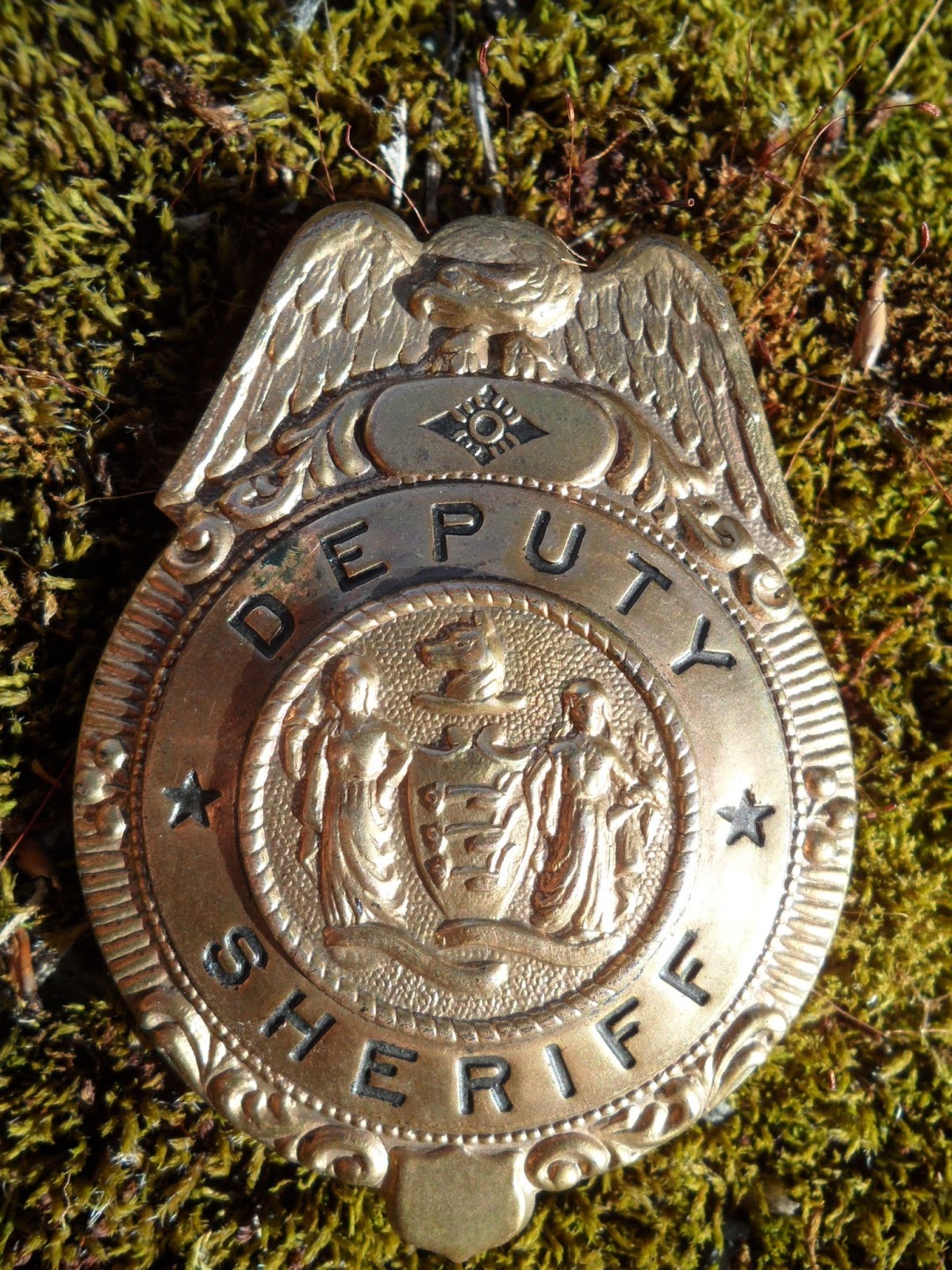
New Jersey Deputy Sheriff Badges, Stock Badges circa 1910-1930

Today we'll be continuing on with our vintage law enforcement theme.  I have two vintage stock badges that date to the "Roaring Twenties" era to showcase.


Both of these badges are "stock generic", Deputy Sheriff badges, for the state of New Jersey.  Both badges are of the same design and style, but date to two slightly different time periods, and are manufactured by different badge makers, using two different manufacturing methods.  Since both badges are not marked with the issuing department, there is no way to know who actually used them.

Prior to World War Two, it was very common for small or rural police and sheriff's departments to issue a "generic stock" badge to their officers and deputies.  These badges could be purchased from law enforcement supply companies with the appropriate officer title, but were generic, with no department or agency name on them.  The badges were "stock" and could be purchased with various finishes.  The badges were much less expensive than custom made badges.  This enabled departments to "badge" all of their officers at an affordable price.  This is in very stark contrast to the practice of issuing very high quality, custom badges, that all departments issue today.


The advertisement shown above is from an old "Darley" supply catalog from the 1920's era.  You can see the price and options for the two type badges that I have, in the lower right corner of the the catalog photo-scan pictured above.

Gold Badge circa 1910's
The earliest of the two badges that I have is the "gold badge".  This badge is die-struck from brass and is most likely lightly plated with gold.  The metal is thinner overall, with the area of the state seal, quite thick and heavy.  


Tongue Catch on Gold Badge
We can tell that this badge is from the 1910's through the 1920's by the style of the back pin.  The catch on the pin is the old "tongue" style that was used during this era.  The pin itself is self-springing to hold tension when it is fastened.

Nickel Badge circa 1920's
The second badge is a much heavier badge that is cast from brass and then plated with a heavy plating of Nickel.  The state seal is left un-plated, giving it a nice bronze contrast to the nickel silver badge body.   The wear on the surface of the badge clearly indicates that it was worn for many years.

Small Burgess Catch on Nickel Badge
The catch on the back of the Nickel Badge is a "small burgess" catch.  This style of catch was patented in 1910 and is seen on badges up until the mid 1900's.  Based on the style of this badge, a stock generic, it is safe to say it dates to the 1920's to 1930's.

These old "stock generics" are often mistaken for toy badges.  Most of the toy badges in this style were made with crude castings of pot-metal or lack the weight and detail in the center seal of the originals.  It is worth taking a close look at any "toy badge" that you encounter to make sure that it is not one of these old, historic badges!

Now for a few closer photos:


Friday, June 19, 2015

Mohave County Sheriff's Department Belt Buckle, circa 1970's Arizona

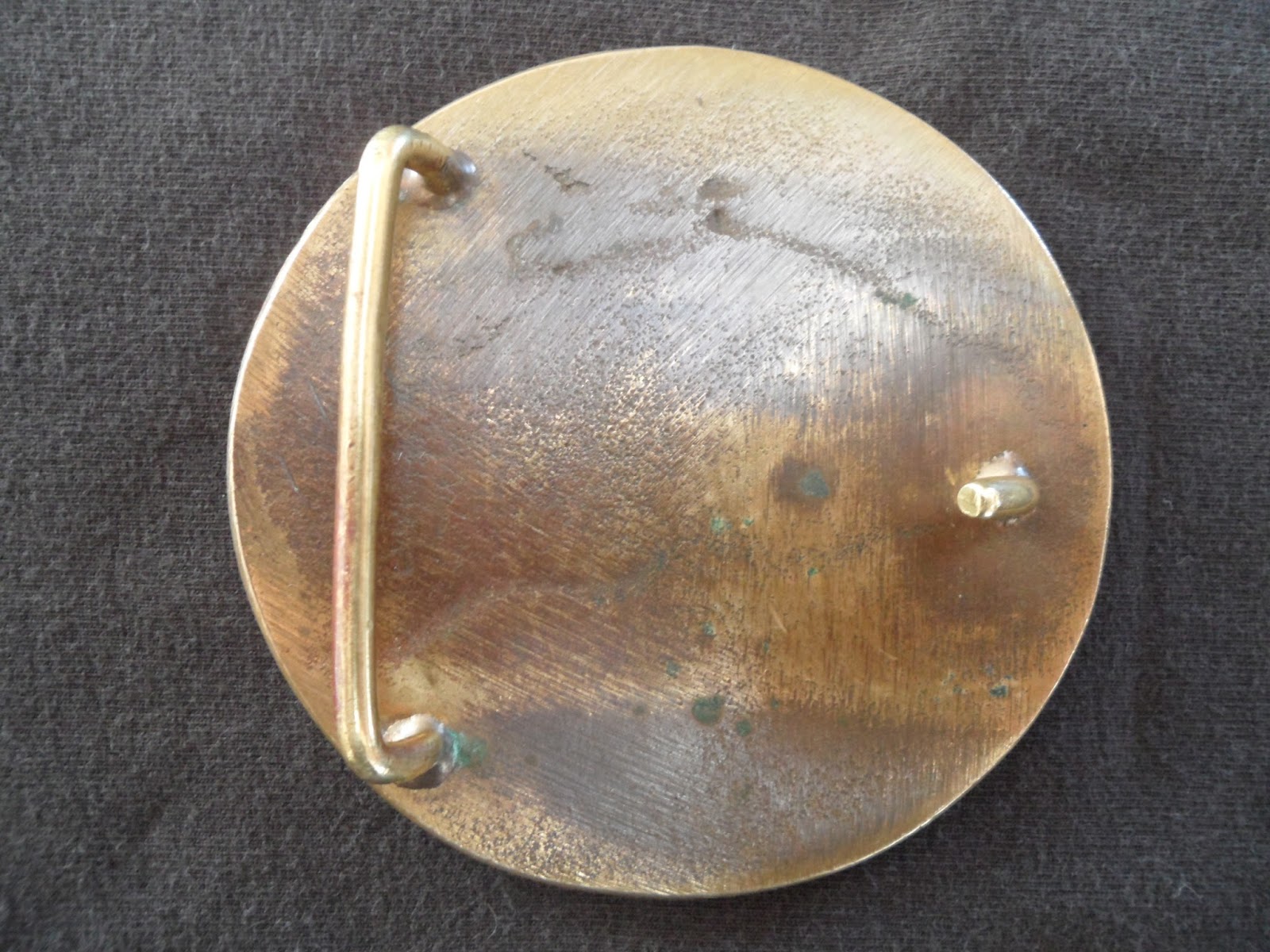
Today I picked up a very interesting new addition for the "Badge Collection".  It is a solid brass belt buckle from the Mohave County Sheriff's Department in Arizona.


I can not be certain of the exact age, but when I picked it up I guessed that it was from the 1970's or 1980's.  After a little bit of online research, I found a forum posting that showed a duplicate of this buckle.  The poster stated that he received the buckle and a department patch, from a Mohave County Deputy in 1979.  It looks like my guess was right!

http://smith-wessonforum.com/s-w-revolvers-1961-1980/197439-honorably-retired.html

The buckle appears to be worn a bit smooth on the surface, which indicates that it was probably worn on the duty belt, behind the Sam Browne gun belt.   The buckle is unmarked so there is no way to tell who did the casting.


In the 1970's, Mohave County, Arizona, was a very rural "Wild West" county with a very low population of around 50,000 or so.  Today the population has grown to over 200,00 and the sheriff's department is a very modern, 21st century department.  

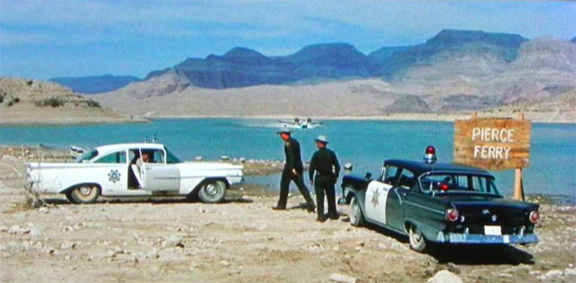
Mohave County Sheriff's Department had it's moment in the "Hollywood Sun" back in 1959, when it was featured prominently in the movie "Edge of Eternity".  The movie featured a Deputy who solves a grisly, multi-victim murder at the edge of the Grand Canyon.  The highlight of the entire film is when it ends with a dramatic fight scene in a cable gondola car above the canyon! 


Here's a New York Times review of the movie from 1960:
  
 http://www.nytimes.com/movie/review?res=9506E3DE1E38E333A25756C2A9649C946191D6CF

Here's a shot from the movie showing one of the Mohave County Sheriff's Department patrol cars and a deputy.  The car on the left is from the Arizona State Patrol and the car on the right is from the Sheriff's Department.


And here is a movie still that shows the old Mohave County uniforms.  The shot is from 1959, but I would imagine it would still be the same in the 1970's.


And to finish things up, here are a couple more shots of the buckle.


Thursday, June 18, 2015

Danish Hiking Club Song Book for Meetings 1937, Dansk Vandrelaug's Sangbog D.V.L.

Here is an interesting little book that I picked up yesterday.  


We headed out to run a few errands here in town, and decided to swing by our local thrift store to see what, if any, treasures we could find there.  I found this wonderful little song book that was published in 1937.  The best part was that it was only .99 cents.  I love it when that happens!  I will display this with my Scandinavian grouping of military and vintage camping gear.


This book is small, 8.5 cm, by 12.5 cm, by 2 cm, and is 473 pages in length.  That's a lot of pages in a tiny book!  The book was published in 1937 by the Dansk Vandrelaug,or D.V.L..  Know in English as "The Danish Hiking Club".


The D.V.L. was founded in May of 1930 with 20 original members.  By the end of 1930 it had grown to 100 members, by 1937 it was 38,000 members and then it grew even larger, to around 70,000 members in 1958!  Today there are over 8,000 members in 20 local chapters throughout Denmark.  It is plain to see that it was, and continues to be, a very popular club and association in Denmark!
DVL Web Page / History

This little song book was meant to be used by club members when they attended their local meetings.  You don't see that sort of thing these days.  They must have had a great time back in the "old days" of the D.V.L. !

Early photo of D.V.L. hikers from the 1930's (From D.V.L. main website)

I don't read Danish, so there is only a limited amount that I can say about the contents, so I will let the photos do the talking for me.  Enjoy!