Today we'll be building on the last post, and showing off the matching THW field canteen that was issued along with the THW mess kit.
You can read about the matching mess kit here:
https://sharky-fourbees.blogspot.com/2018/06/bundesanstalt-technisches-hilfswerk-thw.html
Sometime in the 1960's, the THW ( Bundesanstalt Technisches Hilfswerk), started issuing this "new style" canteen, replacing the old, WW2 styled, post-war canteens. These "new" canteens were the same style and type that were adopted for the Bundeswehr, but were painted in the "Civil Defense Gray". These gray canteens were issued to nearly all of the various Civil Defense agencies, in addition to the THW
The canteen comes with a top cup and a bottom bowl. The canteen is carried inside.
The entire set fits nicely together and is secured with a spring loaded latch.
The lower bowl has a synthetic gasket around the inside of the rim, which prevents it's use over flame. In fact, I have never seen this type of canteen with cups, showing any evidence of actually having been used for cooking over flame. It was used for serving only.
There is clip that is used to suspend the canteen from the D-ring on a belt, jacket back, or more often, on the bread bag. The attached leather strap is used to attach the canteen through the leather tab on the bread bag (to prevent it from swinging).
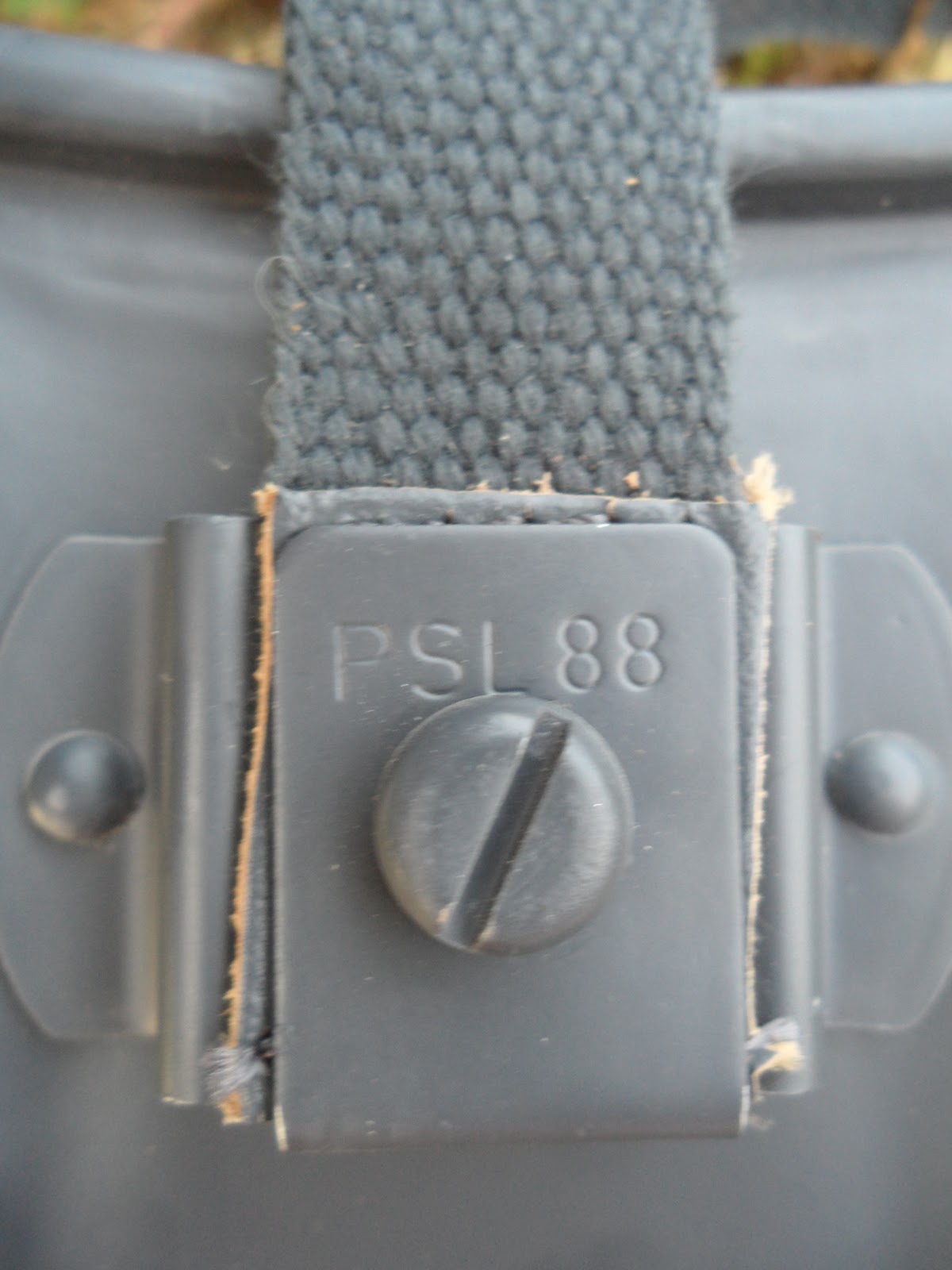
This canteen is in unissued condition, and is dated 1988. It is marked PSL, which is the manufacturers 3 letter code. Each cup, and the canteen itself, are individually marked.
The initials PSL indicate that the manufacturer is: Paul Schulze & Co., of Lübeck, West Germany.
Let's take a closer look.
The other day I was rummaging through the bunker, and noticed that I have a pile of old West German, THW gear, that I haven't shown on the blog. So with that in mind, I figured I'd start with the basic field kit. So here it goes.
Let's start with the classic Mess Kit. We'll take a look at the other parts of the grouping in upcoming posts.
This particular mess kit is in new and unissued condition. It is dated 1988, which is just before East and West Germany re-unified in 1989.
This style of mess kit is nearly identical to the original, WW2, M31 German mess kits, but there are a couple of distinct differences. The first is the style of bail lugs and the height. The post-war kits are about 1/4 inch taller than the WW2 version. Other than that, it's the same kit the WW2 troops were carrying.
Originally the THW, or German Federal Agency For Technical Relief as it is called in English, issued out a bread bag, canteen, mess kit, and silverware set that every trooper carried into the field. These days, standard, pre-packaged, field rations are issued out. These new rations do not require the use of mess ware like this, so these old style kits are no longer issued.
This kit stamped PSL 88 on each component. PSL are the initials of the manufacturer, and 88 is for the year, 1988.
The initials PSL indicate that the manufacturer is: Paul Schulze & Co., of Lübeck, West Germany.
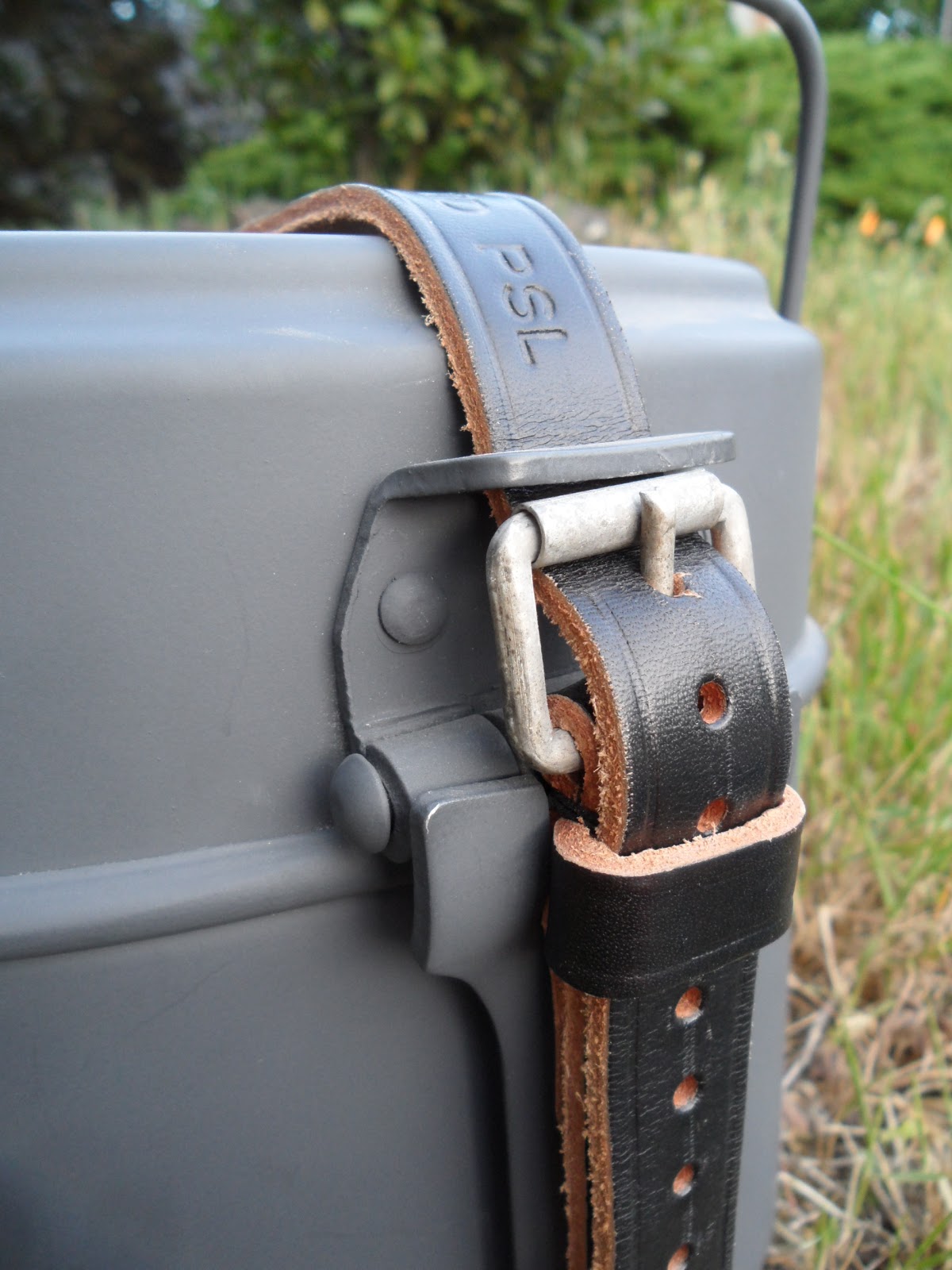
The entire mess kit is strapped together with a black leather belt. This belt was issued with this kit and is stamped BUND PSL. BUND indicates this is official federal issue, and PSL is the manufacturer. These belts are virtually identical to the WW2 versions.
The mess kit has the bottom "pot", an inner "bowl", and the top "cup".
The "cup" can be used on its own, or used as a lid for the pot. The handle of the "cup" can be used to lift and hold the bowl.
Traditionally these mess kits would be strapped to the outer loops of the bread bag.
In my opinion these old German mess kits never go out of style. They are highly sought after by both collectors and "bushcrafters" alike. I myself, collect them, and use them!
Let's take a closer look at this beautiful kit.
The weather here in the beautiful Pacific Northwest has taken a turn for the better........with clear skies, warm temps, and a couple of days off, I decided to tackle a little project that's been pending for a year or so. Time to re-handle an old Pulaski head that's been banging around the shop!
I picked up this Pulaski a year or so ago, from one of our local "junk stores". Sometime recently it had the handle replaced with a fiberglass handle, that was epoxied in place. It was a terrible job and poorly executed! On top of that, how could anyone use an old fiberglass handle on a beautiful old Pulaski like this? !!! I knew what I had to do. I paid for it and hauled it home.
Removing the handle turned out to be quite a miserable job! After 2 hours of drilling, chipping and pounding, I finally separated the head from that miserable handle. After that ordeal, the Pulaski head ended up under the workbench, waiting for just the right hickory handle to show up. That day was last Saturday! While running errands around town, I spotted the handle hanging on the rack at our local hardware store. Beautiful, straight grain, and good color. Perfect!
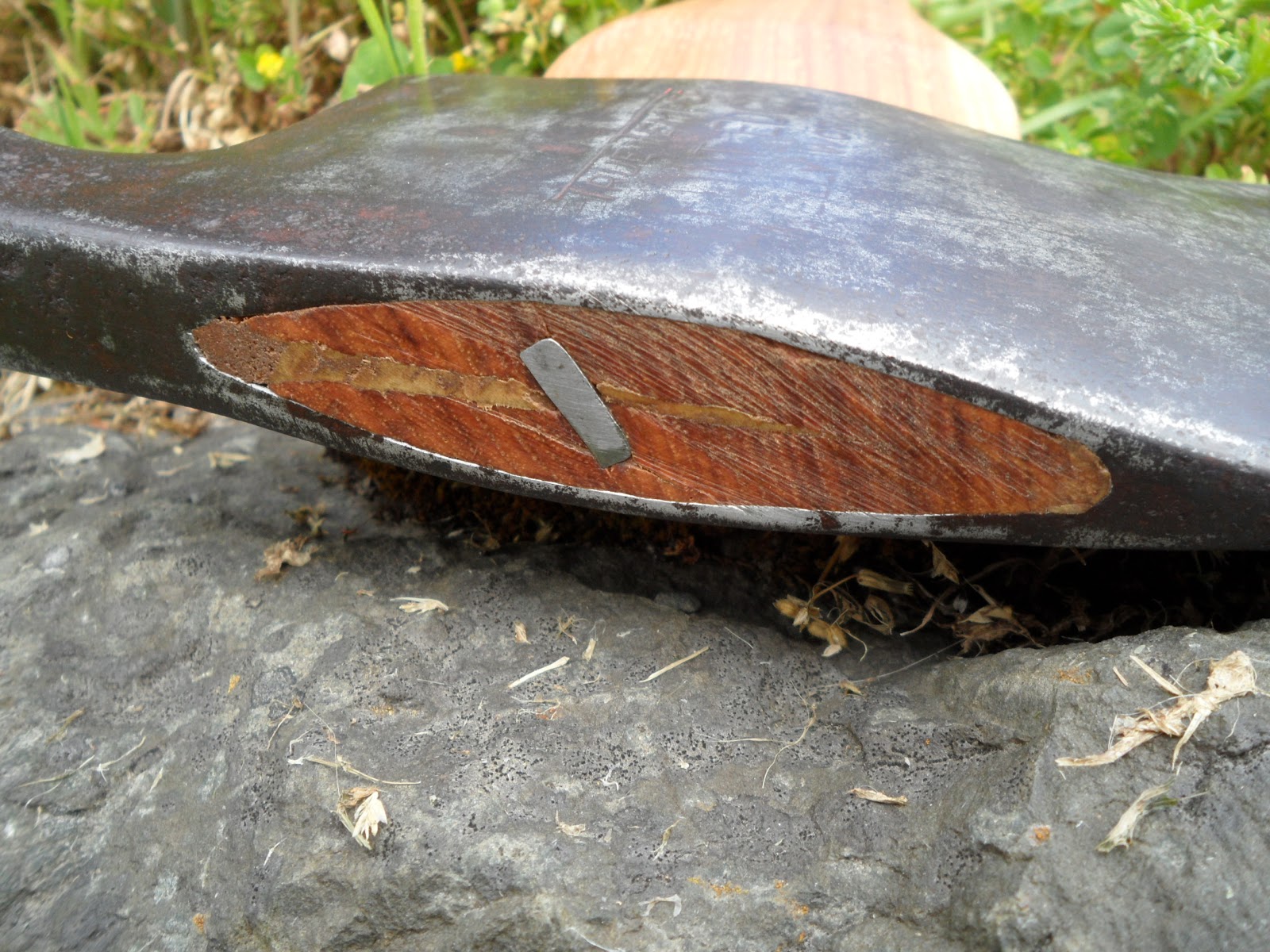
I spent the afternoon fitting the handle to the eye of the head and then set Pulaski head with wedges.
I finished out the project with a healthy coating of Danish Oil, and a proper sanding of the handle. All in all, I'm quite pleased with it!
I left the head mostly "as found" with a natural patina. I lightly sanded the head with very fine sandpaper to remove some loose rust, and then oiled it up. I'll get to sharpening it soon, but for now it's just a joy to look at, as it is still quite dull. I plan on making this Pulaski a "daily chopper" that I'll haul with me into the field, so I wanted to leave it with that great "been there, done that" patina.
There is a bit of red paint in a few of the stamped letters that hints of it having been a fire service Pulaski in a previous life. Unfortunately, there is no way to tell now.
The Kelly Axe Company used both the True Temper, and Kelly Works names, as well as Flint Edge on their axes from about 1949 to 1983. I am guessing from the condition and patina of the head, that this Pulaski is probably from the 1950's or 1960's.
You can check out my other fire service Pulaski on an older FourBees blog post:
https://sharky-fourbees.blogspot.com/2015/11/us-forest-service-pulaski-fss-woodings.html
These old Kelly Works axes were made from high quality, USA steel, and from my experience, hold a wicked sharp edge! I can't wait to get it sharpened and give it a proper try-out!
Until then, let's take a look at the album.