Friday, April 14, 2017

Austrian Army Folding Shovels, 1957, 1967, with camo covers, Österreichischen Bundesheer Klapspaten, HBA

We just got back home to the beautiful, Pacific Northwest, after a week long trip down to Northern California.  Since we were in the neighborhood, we just had to stop off at our favorite European Military Surplus Importer's warehouse:  Swiss Link, in Paradise, California.  While we were there, we just had to load up the back of the Jeep with some amazing treasures, including these two Austrian Army folding shovels............ 


These two shovels were "hand selected" from a big bin of shovels in the wholesale warehouse.  Both of them included the camo covers. 


One Shovel is dated 1957, and the other 1967.  They both have found a new home in the bunker. (By the way, I have an additional, extra shovel available for sale. Contact me via email or comment if you're interested!).


After WW2, Austria did not fare too well during the post-war occupation.  After they were ravaged by the Russians, and occupied by the US, they finally regained their "independence" in 1955.  Austria declared their "eternal neutrality" and re-started a new army (Defence Force), the Bundesheer.  The new Austrian Army was equipped with US equipment, weapons, and uniforms, as well as their own "Germanic equivalent" to the US uniforms and equipment.  It was no surprise that Austria manufactured, and issued their own version of the US M43 folding shovel.

Austrian soldier in the 1960's.
These Austrian folding shovels were first issued during the first couple of years of the new Bundesheer's existence.  The first camo covers were manufactured using the "new camo" pattern adopted in 1957.  It is my guess that this is also the first year that these shovels were issued as well.  The Austrian Army used this camo from 1957 until the 1970's.  All of the camo was manufactured in the 1950's and 1960's.  Since my two shovels are dated 1957 and 1967, and they have their original camo covers, this makes them some of the earliest of the old, post-war, Austrian equipment. Sometime in the late 1970's, the Austrian Army abandoned the use of camouflage for uniforms and equipment and adopted standard, OD Green for all military equipment and uniforms.

My first shovel is dated 1957, and has an unpainted handle.  The metal on this shovel appears to have been repainted OD Green at some point, later in its use.


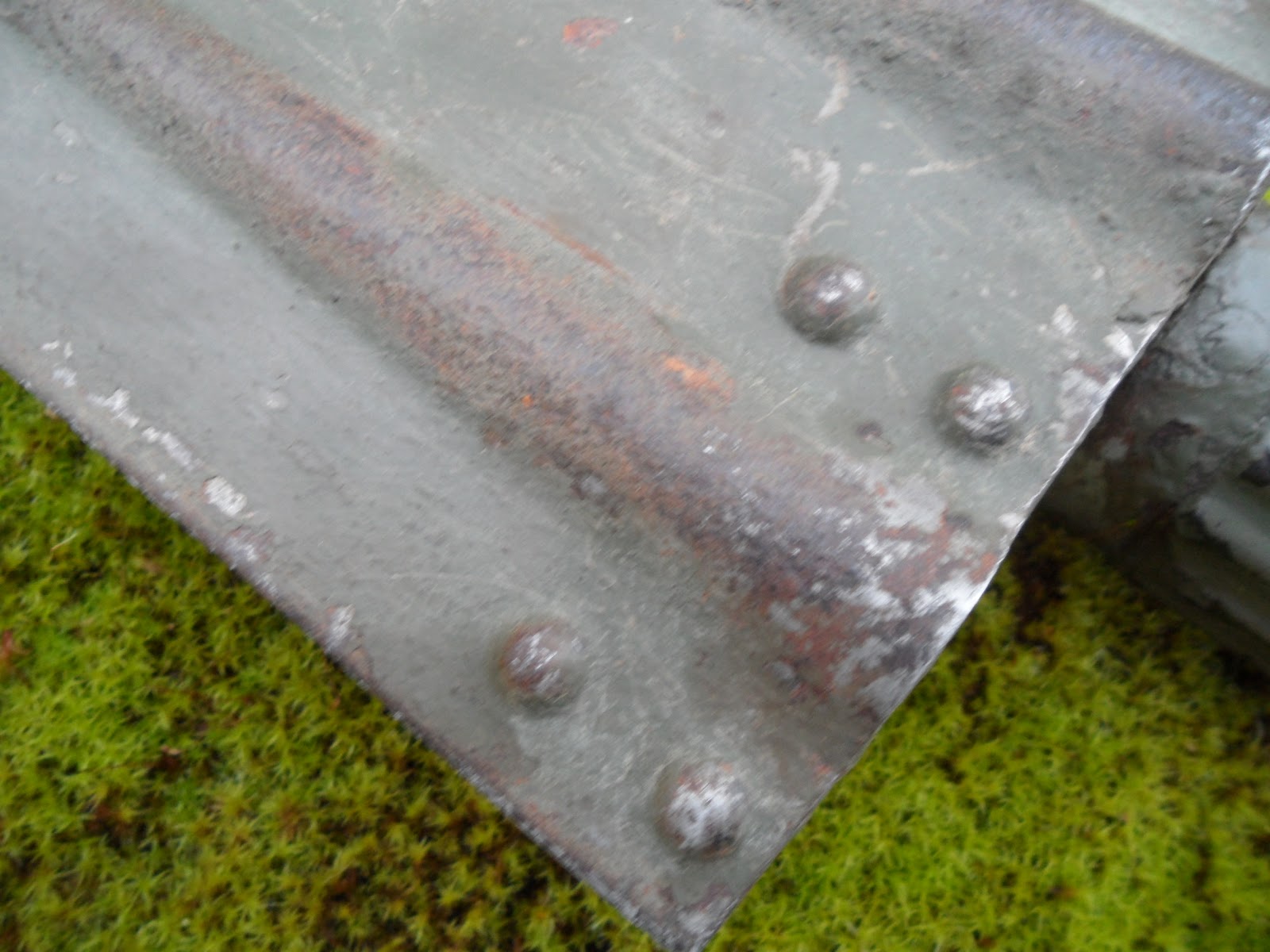
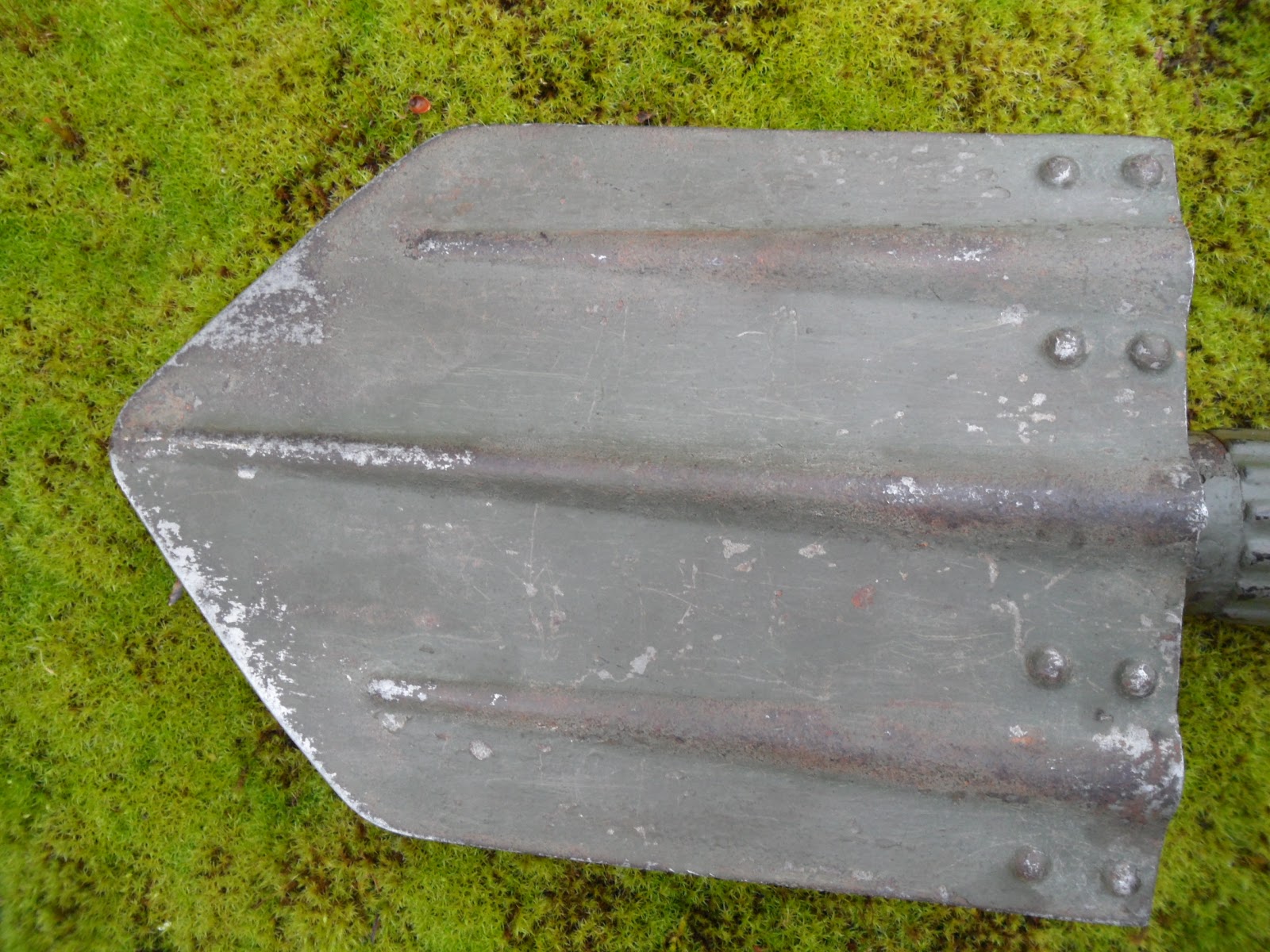
The second shovel is dated 1967, and is completely painted OD Green.  The paint has worn away on the edges of the blade and the old, traditional, blackened steel finish is partially visible.


These Austrian shovels appear at first to be identical to the old WW2, US M43 shovels.  However, on closer inspection, there are some significant differences.  The first and most obvious, is the curvature of the blade.  These Austrian blades are more curved from side-to-side and front-to-back, than the flatter, US shovels.


The blade adjustment and locking arrangement is also slightly different (and improved).  Between the locking nut and the blade mount, there is a flat washer with two flat lugs.  These lugs fit into the various notches in the blade mount-hinge.  This allows for several additional angles as opposed to the "straight, 90 degree or folded" options found on the US shovels, and makes for a very secure lock-up.


There are also a few differences between the two of my shovels.  Blade curves are slightly different and the handles are different lengths, and the handle ends are shaped differently.  The handle rivets and seam in the handle mount sockets are in different locations as well.  I am sure this is just manufacturing variation and not different model specifications though.

Both handles are marked HBA, which stands for  Heeres Bekleidungsamt, or Army Supply Office in English.

Both of the camo covers are well marked, however, the dates are not clear.  I suspect that they are both from the 1960's though.


Now that I've written a "novel", let's take a closer look at these two shovels and covers.

Shovel Number One:  1957


Shovel Number 2: 1967


Side-By-Side Comparison:


Shovel Covers:


Wednesday, March 22, 2017

Photograph of Swedish Army Soldier, circa 1880's to early 1900's, Model 1878 Uniform, M/1878 Vapenrock

While I'm always on the look out for larger items to add to the collection, I am also watching for the smaller items, like photographs.  Original photographs are an amazing glimpse through a window, back into time.  Whenever I find an exceptional one, I snap it up.  I had that chance just the other day.


We made a quick stop at one of our favorite thrift stores to see if there was anything new that we couldn't live with out.  I spotted a lone photo on a table, and immediately I knew it was not an "ordinary" family photo.  The price was right and of course I snapped it right up!


The photo is of a Swedish Army soldier that was taken some time in the late 1800's.  My best guess would be some time in the 1880's.

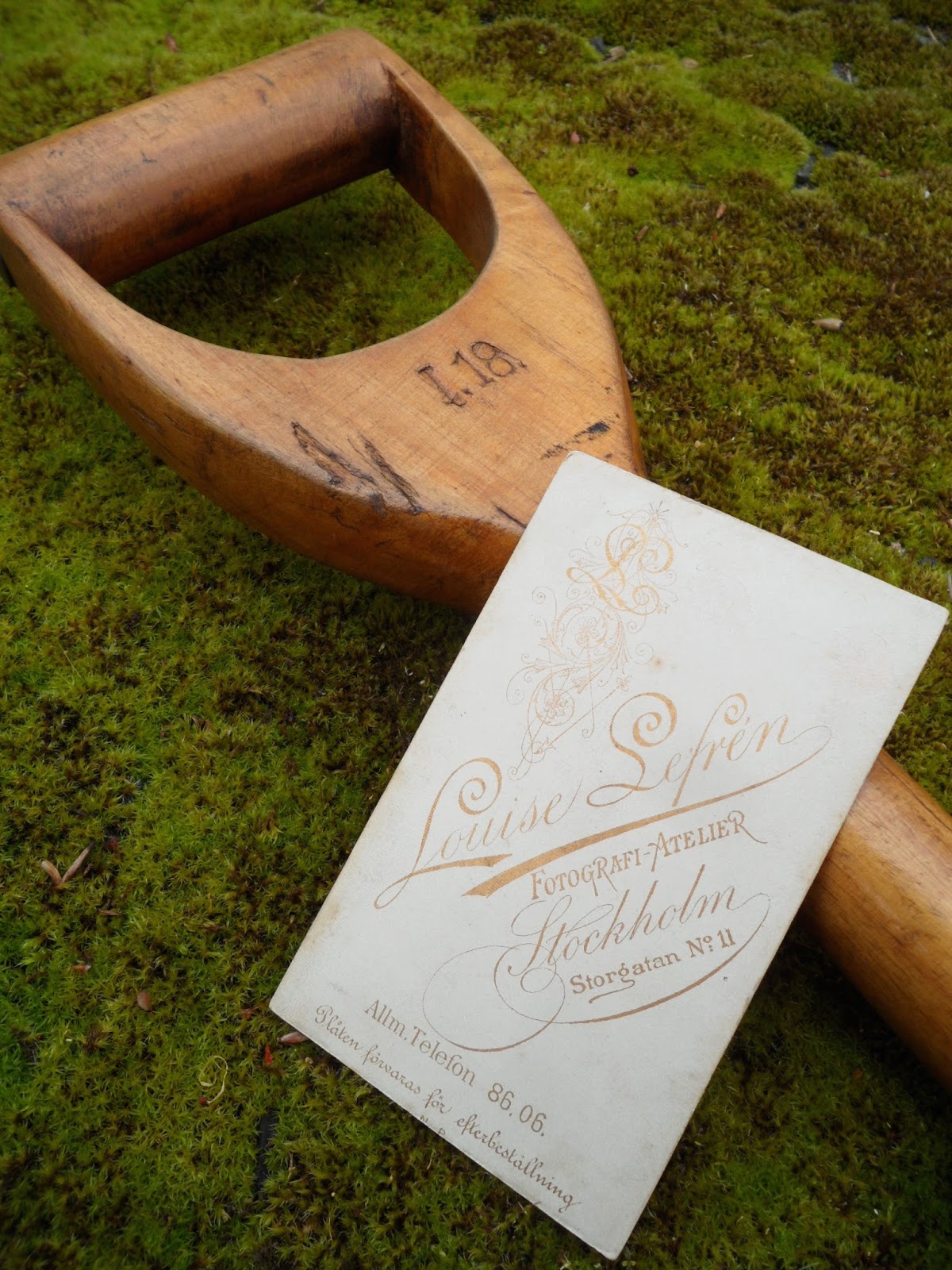
The photo was taken by a Stockholm photographer. One very interesting detail is that it lists one of the early telephone numbers for the business.  It is little clues like this that help date a photo.  The first telephone lines were installed in Stockholm in 1877.


The soldier in the photo is wearing a Model 1878 uniform.  These uniforms were first issued in 1878 and were worn until 1906, when the new Model 1906 uniforms were issued.  Some of the old Model 1878 uniforms continued to be worn past 1906, as they were phased out.

The photo is a typical "parlor card" photo that was very popular during the late 1800's and early 1900's.  When all of these clues are taken into consideration, it is safe to say that this photo was taken some time in the late 1800's (plus or minus a few years on either side).
Photos of the old Model 1878 uniforms aren't often seen, so I am thrilled that it found its way into the collection.

Here are some closer looks at the photo and some of the finer details.


Wednesday, March 15, 2017

Dutch Army Shovel, Entrenching Tool, Folding Shovel, Post-War version of German Klapspaten, circa 1940's

Today is a continuation of the "parade of shovels" that I started a week ago!  This will be the last shovel I'll be showcasing for awhile, that is until I find another "can't pass it up" deal.


This shovel is a very early, Post-WW2, Dutch Army folding shovel.  Of all the post-war shovels, this one is probably one of the most confusing (and interesting) to collectors.  My shovel was an "eBay score" and arrived with an original, US M43 Type 2, shovel cover, dated 1957.  Two scores in one deal!


Immediately after WW2, the re-building began for the Royal Dutch Army.  Instead of adopting the "old" uniforms and equipment of the WW2 era, they adopted a mix of British and American equipment and uniform styles.  Most of the first equipment issued was actual war surplus that was donated to the the cause by the UK and US.  The new Dutch Army made it's appearance in the field looking very much like US soldiers with a mix of UK and US equipment........with the following exception.  They carried "German Shovels"!

Surprisingly, the Dutch Army was initially issued with "German Folding Shovels"!  However, they were not exactly German, or were they........
These post-war, Dutch shovels are unmarked, and are nearly indistinguishable from the WW2, German issued shovels.  The ridges pressed into the blade are ever-so-slightly less angular than the German shovels, and when the blade is folded flat, it comes to rest against the wood handle.  The WW2 German shovels fold closed with the blade slightly angled away from the handle, by about 12 degrees.  In all other respects, the shovels are the same.  In fact, they are often mistaken for, or  presented as, "genuine WW2 German shovels" when sold.


Nearly all collectors today go on the assumption that these Dutch shovels are copies of the WW2 German shovels, and were made in the early post-WW2 days by the Dutch themselves.  I however, have my doubts that this is the full story. 
My theory is that the Dutch had a factory that was still operational from the German occupation during WW2, that had been manufacturing shovels for the Germans during the war (possibly kept secret to prevent Allied destruction).  It is my guess that one of two options explains these "Post-War Dutch-German" shovels.  Here are theories about the origins of these Dutch-German shovels:

At the end of the war, there was a stockpile of unfinished, or unissued, shovels that were quickly finished up for issue to the new Dutch Army.  This would make the shovels "Genuine WW2 German".  The second option would be that the Dutch factory was still tooled up for shovel production at the end of the war, so the Dutch just continued production of the German shovels for issue to their new army.  The third option is that the Dutch took the time to meticulously copy and reproduce the WW2 German shovels.  This third possibility seems highly unlikely.  It seems VERY strange that a post-WW2, Dutch Army, that had just recently been occupied by a hostile German Army, that had just adopted a 100% non-German appearance, both in uniforms and equipment, would choose to produce a very iconic piece of German equipment like the WW2 Klapspaten.  To further back up my doubts, the US gave the Dutch a huge supply of unissued WW2 dated US folding shovels immediately after the war.  There really wasn't a need to go to all the effort to tool up a factory to produce a very complicated German folding shovel, only to immediately abandon that style for the US folding shovels.  It just doesn't make sense.  In fact, after that initial "German Shovel" issue, the official Dutch shovel was the US made M43 folding shovel, and later, an all-Dutch version of the M43.

UPDATE:  You can read about my Dutch shovel cover that was made specifically for this shovel over at this fourbees blog posting:
http://sharky-fourbees.blogspot.com/2018/04/dutch-army-shovel-shovel-cover-1950s.html
 
So my thoughts about these "Dutch-German" shovels can be summed up like this.  It is my opinion that these are either actual "end-of war", Dutch produced, German shovels, or shovels produced by the Dutch in one of their factories that had been manufacturing shovels for the Germans during WW2.  Either way, these are very unique, Dutch-German shovels to say the least!

The first clue that a "German folding shovel" is Dutch, is that the metal head has been painted OD Green.  (All green versions are sometimes found, but these are usually Norwegian re-issued,  WW2 German shovels).  The WW2 German shovels are finished in blackened steel.  Under the Dutch green paint, the Dutch shovels are "bright steel".

My shovel has the green painted head, folds flat against the wood handle, and the slightly less angular blade ridges.  The metal under the green paint is bright steel.  It is a Dutch German, Post-War folder!

As my research continues into these shovels, I will be contacting the Royal Dutch Military Museum in the Netherlands to see if they have any information about these shovels and why they were issued.  If they don't have any clues or facts, then the true origin of these shovels may never be discovered.

With all that said, let's take a closer look at this very unique shovel.