Tuesday, March 14, 2017

East German Feldspaten, Field Shovel - Spade, Early Post-War circa 1950's, Bat Logo, DDR NVA

Today we'll be taking a quick look at another recent addition to the shovel collection.

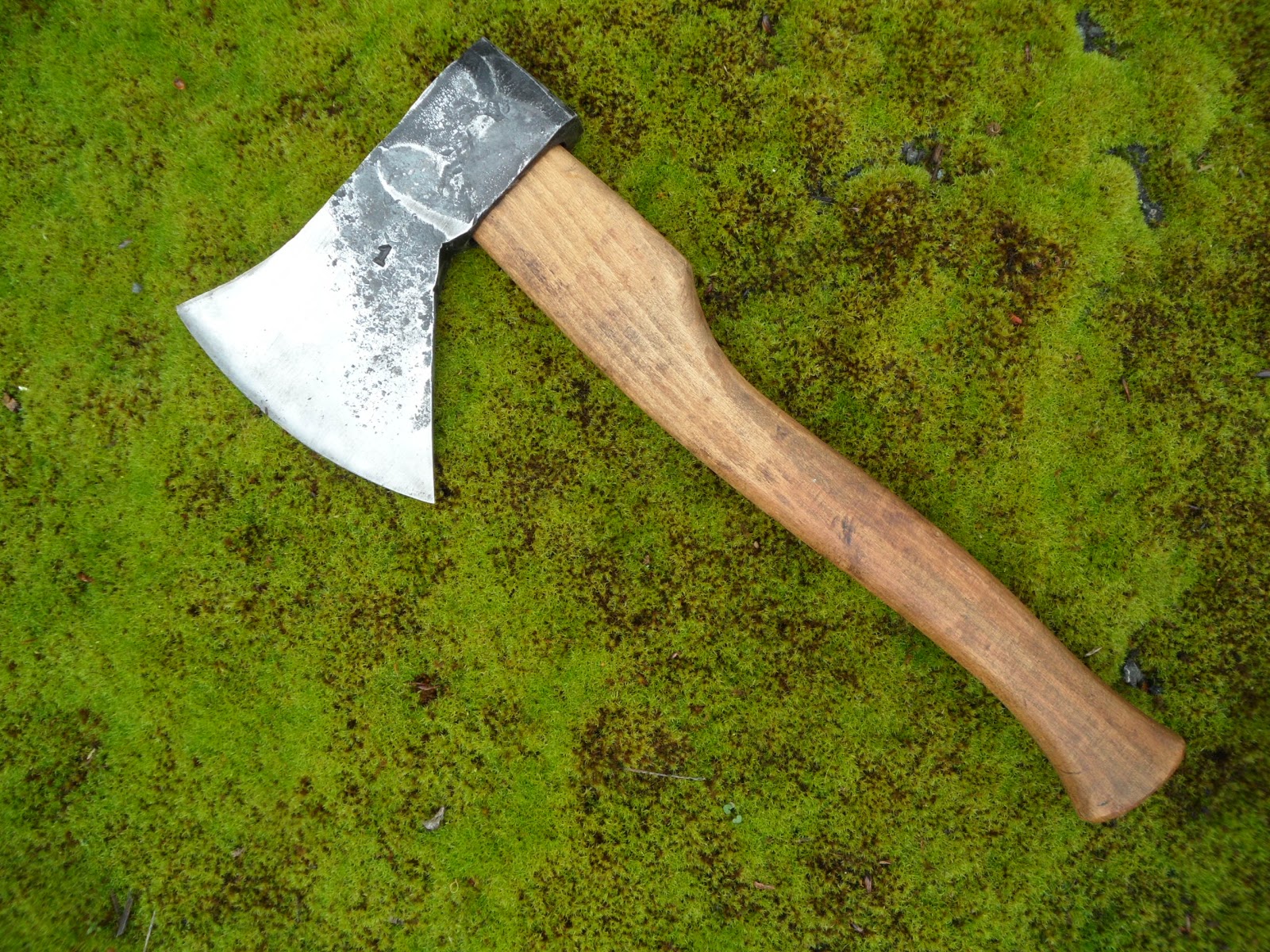
Spade alongside early pioneer hatchet.

I have had my eye out for a good deal on an early East German, square bladed spade for some time.  There are quite a number of them floating around out there, but I was interested in one in great condition and at a great price,.  That opportunity presented itself a couple of weeks ago, and now I have a new spade in the collection!


This particular spade is an early model that was produced in the 1950's by the fledgling country of East Germany, for their new army, the NVA.

When I received this shovel, the blade and lower portion of the wood handle was covered in East German, OD Green paint that had been sprayed on just prior to placing it into a long term storage warehouse.  The paint was poorly applied, with bad masking lines, and tons of over spray.  The first thing I did after receiving the shovel, was to pull out my trusty Acetone solvent and 3M scrubbing pad.  After a bit of careful cleaning, the OD paint was gone and the original finish was revealed.

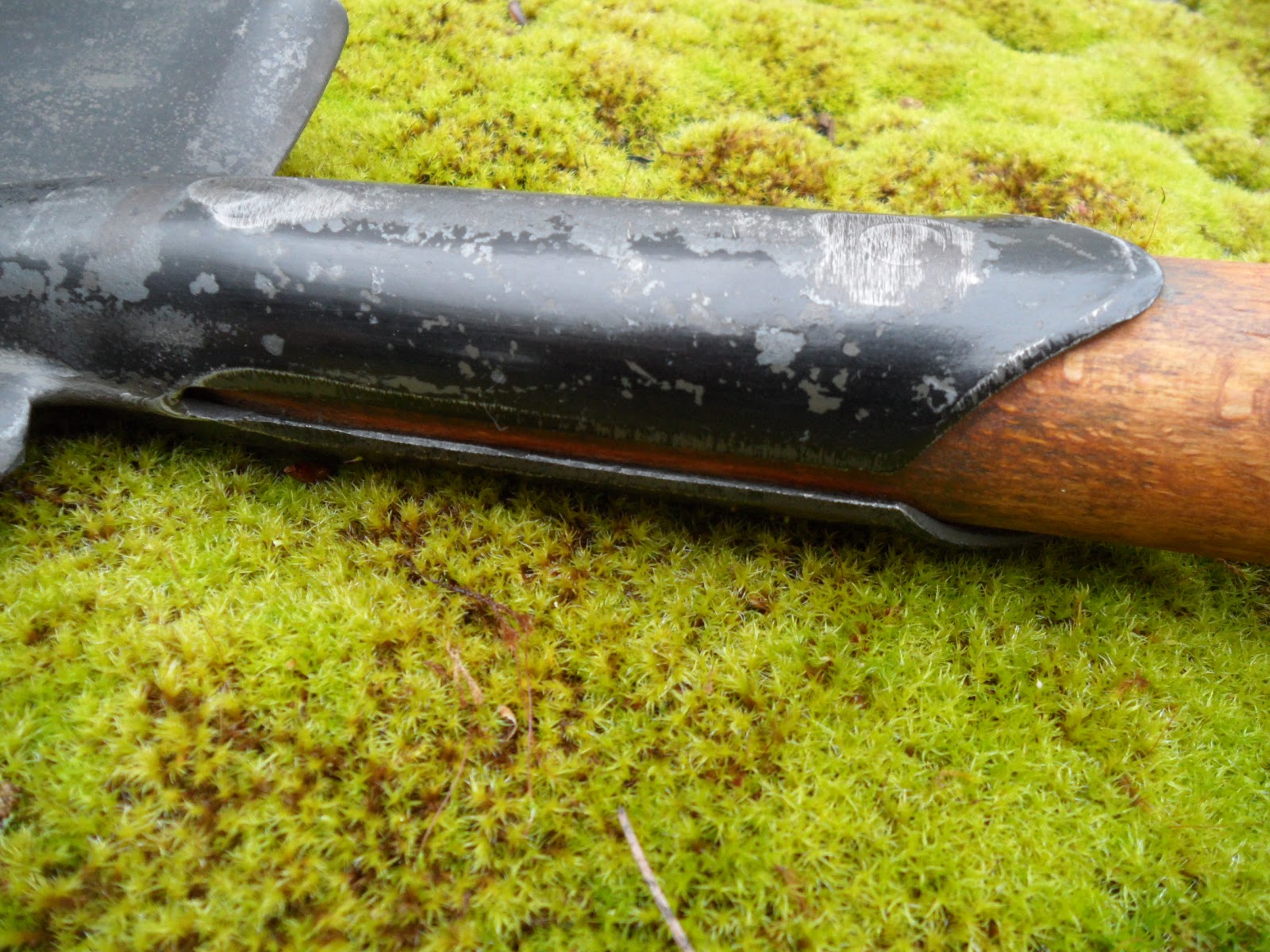
These early east German shovels are built rock-solid and are some of the toughest "trench spades" that I've encountered!  The shank is attached to the blade with heavy welds that are perfectly executed.  The workmanship is "old world quality", which is a bit of surprise for an East German bit of field equipment.  Normally, East German gear is built lighter, and with quality standards that are a bit "lax".  If it were not for the welded construction, this spade would easily be mistaken for a shovel from the WW1 or WW2 era!


The blade is finished in traditional German black, and bears the faint stampings of the "BAT logo" , a "triangled 1", and number series.  The stamping on my shovel is not clear, but still there, and somewhat visible.


The photo below shows how the stamping on my shovel would appear if it was still deep and clear.


These old-style spades served with the early East German forces up until the folding shovels were issued, sometime beginning in the 1960's.  After they were pulled from service, they were placed in storage to await collectors like me!

Now I will be on the look-out for an original East German leather belt carrier for this spade........  There is always something to hunt for!

Here is a link to my previous blog page about my late period, East German folding shovel.  Comparing the "old and the new" is quite interesting.
http://sharky-fourbees.blogspot.com/2011/03/gdr-klappspaten-east-german-entrenching.html 

Let's take a closer look at this wonderful piece of early East German gear.


Wednesday, March 8, 2017

Finnish Army Engineer - Sapper Shovel, circa 1930's -1940's, Imperial Russian Conversion, Winter War and Continuation War, Pioneerilapio, SA, Finland

Today we'll be looking at another recent addition to the Pioneer Tool Collection.  This time it's a Finnish Army shovel.


I picked this shovel up from a US company called International Military Antiques.  They purchased the last of these old shovels from the Finland government when they were surplussed a few years back.  As is often the case with unique, and old surplus items like this, if you don't buy when you see them available, you will find they are all gone before you know it!  I didn't wait.

Sapper shovel with Finish re-issue ammo pouch and Finish re-issue trench spade.
I requested, and received a shovel in "as found", and in "uncleaned" condition.  That is exactly what I received.  The metal portions of the shovel were covered in a thick and hardened, black, "tar paint" coating.  After several coats of paint stripper, and vigorous scrubbing with a 3M green pad, I finally made it through all of the storage preservative and down the the original blued steel.  What I discovered, far exceeded my expectations and hopes.  I was in possession of a very unique and historical shovel, with quite a story.

This particular shovel shows signs of having had the shank rivets ground off and replaced.  This would have been done to replace the handle at some point.

The front of the blade is marked with a stamped letter "P".  The letter "P" stamp indicates that the shovel was assigned to an engineering unit, also called a sapper unit.  Next to the "P", there appears to be another faint stamped letter, or the edge portion of the traditional "SA in  rectangle" stamp of the Finnish Army.  The SA stamp may not have been hit solid, and only the corner was imprinted or the shovel has some unknown other letter designator in addition to the "P".

On the back of the blade, I discovered the distinct, circular manufacturer's mark from the Russian manufacturer.  This was an amazing and unexpected discovery!  

The blade had a hole punched in it so it could be carried from a belt hook or rucksack hook.  This is found on all Finish Army shovels.

The letter "P" and the hole in the blade confirmed that it was a Finish Army issue shovel.  This, combined with the Russian makers stamping, indicated that the shovel was originally issued to Imperial Russian troops during the mid "teens", before or during WW1.  The grind marks and replaced rivets, along with the WW2 era, metal yoked, "D-handle" grip, was sure proof that that this was a "rebuilt and re-issued" Imperial Russian shovel!

Before the Winter War with Russia, in 1939, the Finish Army reconditioned the old Imperial Russian shovels that they had captured during the Finish Revolution.  Most of these Russian shovels had the all-wood handles removed and replaced with "modern" metal yoked, "D-handles".  This is one of those shovels.  To supplement the supply of Russian re-builds, the Billinas Company of Finland made additional shovels to the same design.

This larger style of shovel is a "mid-sized" shovel, half way between the smaller entrenching spade and a full sized shovel.  These were known as "Pioneerilapio", or pioneer shovels.  These mid-sized shovels were issued to Engineering Sapper units and also to heavy machine gun and mortar units.  Since mine is stamped "P", it is safe to say it was carried by a Sapper unit.

Finish Heavy Machine Gun Crew.  Winter War.

This shovel saw service in the Imperial Russian Army during the occupation of Finland and during the Finnish Civil War. After the civil war, it was then was rebuilt.  It then continued its military career in the Finish Army for the Winter war and Continuation War during WW2.  At some point after those wars, the shovel was coated in its "black, storage tar paint" and placed in a warehouse.  There it sat until it was released as surplus in the 21st century!  It is not often that a piece of military equipment can serve in so many historic conflicts, and survive to pass it's story on to the next generations.  Not bad for a shovel that is over 100 years old!

Finish Army troops on the march during the WW2 era.
You can see my smaller Finnish Army re-issue spade at this page on the blog:
http://sharky-fourbees.blogspot.com/2015/10/imperial-russian-finish-re-issue-trench.html

Here is another one of my Finnish Engineer - Sapper Shovels:
https://sharky-fourbees.blogspot.com/2018/04/finish-army-engineer-sapper-shovel.html 

Let's take a closer look at this historic shovel.


Tuesday, March 7, 2017

East German Military, DDR, NVA, Pioneer Axe - Hatchet, circa 1950's or late 1940's for Sapper, Engineer Units

Today we'll be taking a look at one of most recent additions to the "Pioneer Tool Collection.   


This hefty, little hand axe-hatchet, is a vintage East German military chopper that dates to the late 1940's, or 1950's.


I picked this up from a surplus vendor that marketed it as unissued East German.  Based on the style, construction, preservatives, and a bit of OD green paint, I believe that is exactly what it is.

"As Received", complete with wax preservative.

I received the hatchet in the condition it was surplussed in, from long-term warehouse storage.  In other words, in good shape, but coated in preservative!   The bright metal portions of the head were coated in a heavy wax-tar compound.  The wood handle was VERY dry and hardened, and the wedge was missing (probably popped out as the handle shrank).

Missing wedge.

There were a couple of brushed spots of OD green paint on the wax.  This definitely lends credence to its origin as a military hatchet.

You can see one of the spots of green over the black in this shot.

After an extensive bit of "wet sanding" with sandpaper and mineral spirits, I managed to remove the wax coating.  The head was now clean and could be inspected closer.


The head is roughly forged, in typical East German style,  The steel appears to be high quality, and the grinding and shaping of the bit appears to be well done.  No extra effort was put into making it "pretty", another distinct clue as to its East German origin!

The only markings on the bit, is the number "1", stamped on one side.  After removing the wood handle, I weighed the head, and discovered it weighs 1 kilogram, hence the "1" stamping.


The wood handle was poorly fitted to the head.  The handle is in the classic "European Style" with the large axe-type haft that tapers down to a hatchet size.  This is because the old handles were made from European hardwood that was not as tough as American Hickory.  The handle appears to be something like Ash.

To keep the re-hafting of the hatchet looking "authentic", I fashioned a hand cut wedge that did not quite fit perfectly, then cross wedged it with a used metal wedge.  I then soaked the end of the wood, at the eye, in penetrating polyurethane to bond everything and help "glue it in place".  After that set up, I filled in the cracks and crevices with some old, thick, grimy, grease from the undercarriage of my Jeep.  The finished results look perfect, and in character with the rest of the hatchet.  That's what I like to call a "museum quality, and appropriate" restoration!


This style of hatchet was used by the German forces in both WW1 and WW2.  The only difference is that the earlier hatchets were much nicer in their finish work.  In the early days of the East German, the "old equipment" was replicated in style, but not in finish.  This hatchet falls into that exact, early, post-war era, and the finish work confirms it!  These East German hatchets would have been used as "utility hatchets", and carried by sapper or engineer units in the field, and possibly by some of the infantry units along with their entrenching tools.

This hatchet definitely fills a "hard to find" spot in the early East German military portion of my collection.  Now the hunt continues to find more information about it, and to hopefully locate a photo showing this style of hatchet in East German use!  

Until then, let's take a look at the album.