Thursday, March 24, 2016

US Model 1910, T-Handle Shovel dated 1943, C.H. & I Co. Inc., WW2 Shovel Entrenching Tool

Here is the next shovel in our series.  


This shovel is a very nice example of one of the WW2 produced, Model 1910, T-Handle shovels.

When the US entered WW2, the first troops were issued the old WW1 surplus Model 1910 shovels.  After the last of the old shovels were issued, the US Military made another production run of the old style shovels, in 1942 and 1943.

The old WW1 surplus Model 1910 shovels were not dated and did not have the manufacturer stamped on them, they only had "US" stampings. They were also not painted.

Here is a link to my posting on one of the old WW1 versions in my collection:

http://sharky-fourbees.blogspot.com/2015/10/us-model-1910-t-handle-trench-shovel.html

All of the WW2 produced shovels are dated 1942 or 1943, and have the manufacturer stamped on them.  There were a number of different companies that made these shovels during the 2 years of the war that they were produced.  The WW2 versions were also painted green. (The reissued WW1 versions were often painted green in the field during the war, but are not dated).

My shovel is marked with the company stamp of C.H. & I. Co. Inc., and is dated 1943.  This company was contracted to supply replacement handles at the beginning of WW2.  It is my guess that when the US Military put out the contracts for new production T-Handle shovels, they supply could not keep up with the demand to equip the troops.  To augment the supply of new shovels, a parallel program of refurbishing the old WW1 contract shovels was started.  This would explain the shovels with the C.H. & I. Co. handles.  The shovels that have these manufacturing markings, most certainly came from that refurbishing line.  (This is just my best educated deduction, yet to be confirmed)


1943 was a "transition year" for US shovels.  The new folding shovels were first produced and issued in 1943, as the last of the T-Shovels were made.  You will find 1943 dated folding shovels and T-Handles.

The WW1 production T-Handle shovels are always stamped "US" on the metal shank of the blade, and on the wood.  The pre-WW1 shovels that were made at Rock Island Armory, are not tamped US, or dated.
There are also small wood filler-wedges driven in next to the wood handle were it enters the metal blade shank. 

The T-Handle shovels were issued with a khaki, canvas shovel cover that could be worn attached to the belt or on the back of the pack.  Here are two photos of marines during the island fighting in WW2, that show both ways that the shovel was carried.

The Marine on the right is wearing his shovel on the belt.

The Marine on the right has his shovel attached to the pack.

With all that said, let's take a look at the photo album of this WW2 shovel:


In this photo you can see the wood wedge in the handle-to-metal gap.


Sunday, March 20, 2016

Model 1951 US Folding Shovel - Entrenching Tool, Ames 1966, M-51 Intrenching Tool

Here is the first in a series of three postings where I'll be showing the latest three shovels that I've added to the collection.

My Yard Sale Treasures: M-51, M-43, and M-1910 shovels.
Over the weekend we visited our annual "community yard sale", at our local fairgrounds, and really hit pay dirt.  Among other various treasures, I picked up three "new" entrenching tools:  A 1945 T-Handle Shovel, 1945 Folding Shovel, and a 1966 Folding Shovel. 

The first of the three that we'll be taking a closer look at is the Model 1951 folding shovel.


The Model 1951 Entrenching Tool (folding shovel), has quite an interesting history, and is one of the more uncommon of the US shovels.

In 1943, the US military adopted their version of the German Folding Shovel, better know as the Model 1943 Entrenching Tool. 

In 1945, just before WW2 ended, the US Military began working on the design for a new version of the folding shovel that incorporated a folding pick along with the shovel blade. The Ames company made several prototypes for the military, but the folding shovel-pick version was never put into full production due to the end of the war.

In 1951, the US Military resumed work on designing a new folding shovel with pick.  In 1951 the new shovel was officially adopted as the Model 1951 Entrenching Tool, and in 1952, the first of the new Model 1951's were produced.


The Model 1951 Entrenching Tools were produced until about 1968.  They saw service in the Korean War, and in the early years of the Vietnam War.  In 1967, they were replaced with the new, all metal,  Model 1967, "Tri-Fold" shovels.
Even after the Tri-Fold shovels became the official US shovel, the old Model 1951's continued in service until they were completely replaced, often as late as the 1980's in some units.

The Model 1951 shovel is a very interesting shovel, and of all the US shovels, was produced in the fewest numbers.  Today they are some of the more sought after US shovels by US collectors, and some of the hardest to find.  In fact, this shovel I picked up, is the only Model 1951 that I have run across in the field, while "treasure hunting"!
The Model 1951 is a heavy shovel.  The heaviest and largest of all of the US entrenching tools.  The handles are longer and thicker, the blade is larger, and the entire pick-folding assembly adds considerable weight to total unit.  In fact, a new style of shovel carrier had to be designed to carry the Model 1951's.


The Model 1951's were too large to fit completely into the old canvas covers.  When carried in the old WW2 style covers, the flap could not be fastened.  To correct this problem, the Model 1956 Shovel Cover was created.  This shovel cover was slightly larger and incorporated a bayonet mounting tab and strap on the outside to carry the M8A1 Bayonet Scabbard (for the old M6 and M7 bayonets).  These covers used ALICE Clips on the back to attach to the web belt.  Luckily I just happened to have one of these old Model 1956 covers waiting for a shovel to fill it!

The shovel blade on the Model 1951 was reshaped into a more traditional, rounded blade, that incorporated two holes in each upper corner.


I am not certain what these holes were for exactly, however I have heard them referred to as "drain holes".  It is just speculation, but possibly they could be used as an alternate carrying method by hanging them through one of the holes on a hook.  It is interesting to note that quite a few other countries produced entrenching tool shovels with the holes in the blade as well: Sweden and China to name a couple.  In Sweden they carried the shovel on a belt hook, clipped through the blade hole.  My research continues for the "official" reason the holes were punched in the US Model 1951 blades.

The wooden handle was made thicker, with flatter sides, making it more oval than round.  A hole was drilled through the end as well.  None of the earlier US shovels had this feature and as far as I know, no lanyards were ever issued with them.  This is another design mystery with these shovels!


My particular shovel is dated 1966, and is stamped Ames, for the manufacturer.  Ames was the largest producer of US Military shovels during this time period.  
http://www.ames.com/about/about-ames/ 


I think I've said enough about these unique shovels, so lets take a closer look.  Here is the photo album of the shovel and the canvas carrier.

Friday, March 18, 2016

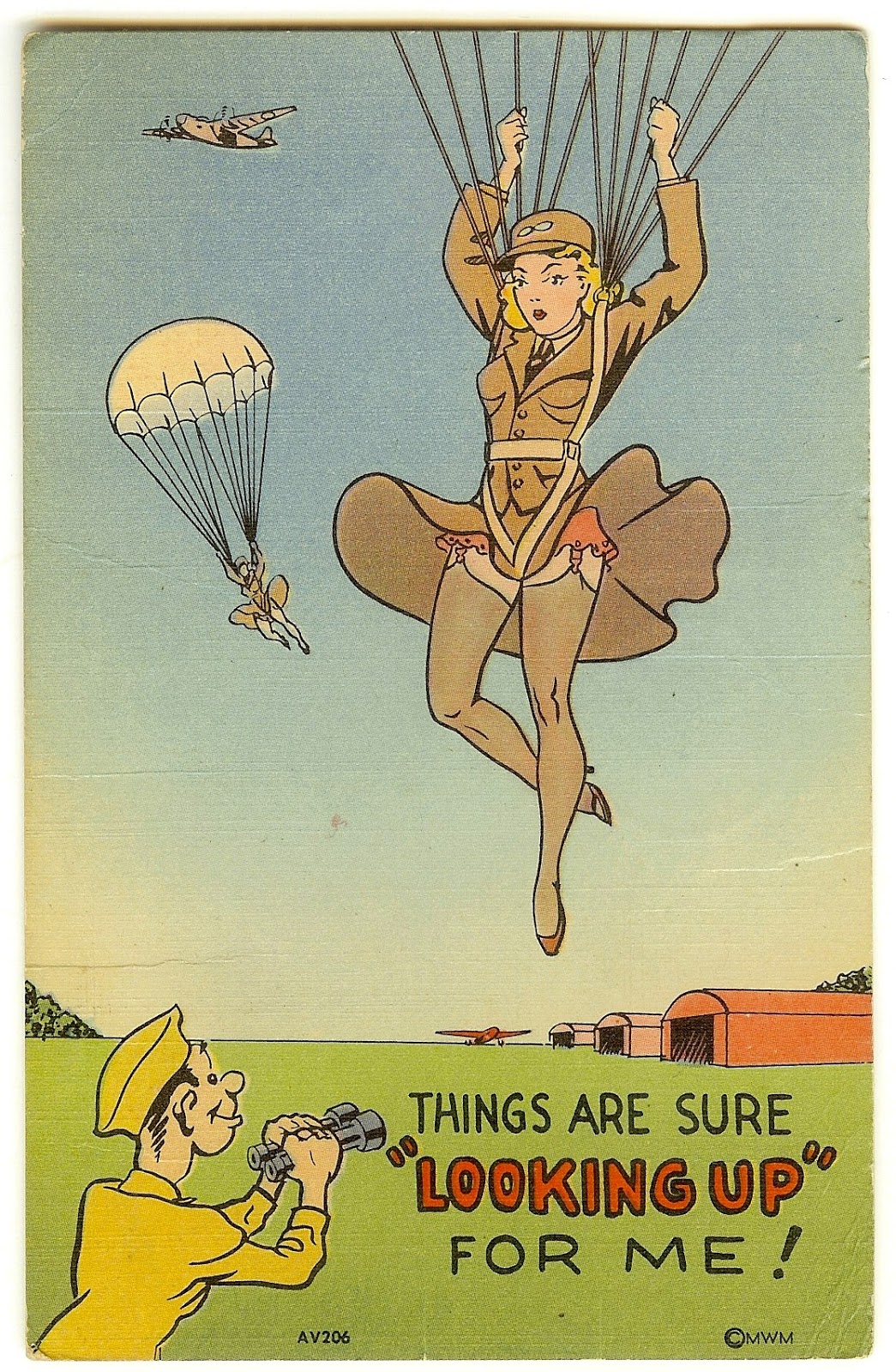
WW2 Humorous Post Card, 2036 Fire Fighting Platoon, 8th Air Force, 385th Bombardment Group USAAF

Today we'll be taking a look at a wonderful little nugget of personal WW2 history.

I am always on the lookout for unique and historically relevant letters, photos and postcards that tell the history of warfare from the perspective of the "man in the trenches".  When 
I spotted this postcard, I realized it had a great story to tell.
This is a "humorous postcard" that was mailed home by a Private, serving as a firefighter in the US Army Air Force during WW2.


The author of this card was Private S. Makarowitz.  According to the return address, Pvt. Makarowitz was assigned to the 2036th Engineering Fire Fighting Platoon, based at Harding Field, Louisiana, USA.  The card is postmarked July 24th, 1943.

The 2036th Engineering Fire Fighting Platoon was part of the 385th Bombardment Group, of the US 8th Air Force from 1943 to 1955.  Shortly after this post card was mailed, Pvt. Makarowitz's unit was sent overseas to England.  They served as the "Crash-Rescue Fire Department" for the 385th Bombardment Group while they were stationed at the Royal Air Force (RAF) Great Ashfield Air Base.  The airfield was located near Suffolk, England.
A check of the causality and killed lists for the this unit revealed that Private Makarowitz survived the war.

I will let the photos of this card speak for themselves, however, here is a transcript of the letter's narrative, by Private Sol Makarowitz:

Dear Mr. Fleisher,

I am getting along fine here and everything would be swell here if it wasn't for the temperature which is 120 degrees.
You remember what Squinty(?) said well I think he is all wrong.  Of course I would like to be back but it isn't as bad as he said. 
I hope you are all well.
Regards to everyone,
Sincerely
Sol
 

Wednesday, March 16, 2016

East German Rg57 Cleaning kit for AK47, Reinigungsgerät 57, 7.62 x 39 MPi-KM rifle

Today we'll be taking a look at another German rifle cleaning kit. This time it is an East German version of the old Rg34 cleaning kit that dated to the WW2 years.


This cleaning kit was officially designated the Rg57, or Reinigungsgerät 57.  It first went into production in 1957 and was intended for the East German version of the AKM, or AK47, better known in East German Army terms as the the 7.62 x 39 MPi-KM.  

These Rg57 cleaning kits were manufactured into the 1970's, until the AK74 in the smaller, 5.45 x 39 caliber, was adopted by East Germany.  At that time the tin cleaning box was discontinued and the new AK74 tools and brushes were issued in a roll up pouch, without a tin box.

The pouch and kit we are looking at today are one of the late production Rg57 kits.  There were slight variations in markings on the tin can lid, and slight tool variations, but essentially they remained the same for the entire time span of their production.  Some of the early kits came with a "pleather" - fake leather, pouch that held the tin and its contents.  The later versions, like this one, came in a roll out, synthetic backed, cloth envelope with attached drop cloth.


The metal tins are stamped with either RG57 alone, RG57 with a single digit number, or just the single digit number.  Mine is marked "1".


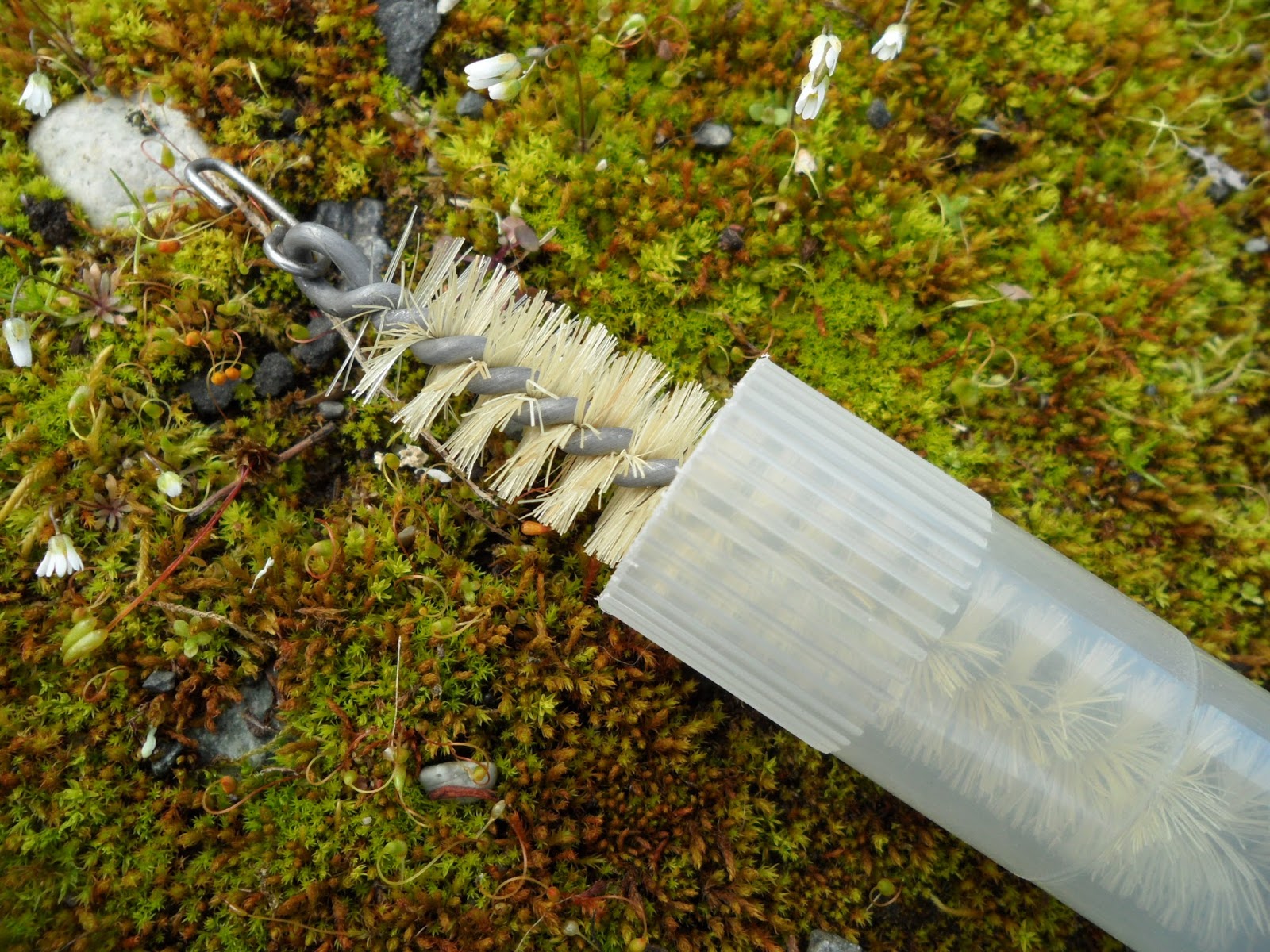
The kits contain a bore brush, chamber brush, small gas port cleaning brush, "broom" brush, combo tool for firearm disassembly, weighted pull cord, and a very cool little metal oil can.    The oil can is made of stamped metal with a combination spout - cap.  No provision is made for cleaning fluid in these kits, only oil.  There is also a plastic tube that holds the bore and gas port brushes so they don't get crushed.  


These cleaning kits are quite small and compact compared to the West German Rg34 tins.  Here is a comparison of the two.  
Here is a link back to the West German Rg34 posting (the larger tin kit):  http://sharky-fourbees.blogspot.com/2015/07/west-german-rifle-cleaning-kits.html


Before we jump int the photo album, here is a great photo of some East German Army soldiers cleaning their rifles with these kits. You can see the kits on the table.


Now let's take a look at the album.