Sunday, August 7, 2016

Swedish M94/14 Mauser Carbine Ammo Pouch, Model 94/14, Model 94, Göta Ingenjörkår, Gotland Engineer Corps, G.I.K. I.2

Today we'll be taking a look at a very unique ammo pouch that was issued to the Swedish Military for the Model 94/14 Carbine rifle.  


This particular carbine ammo pouch is very unique, not only for it's near perfect condition, but for the military unit it was issued to.  

Before we dive further into the history and details of this pouch, here is a link to one of my blog pages about my own Swedish Mauser Model 94/14 Carbine. 

http://sharky-fourbees.blogspot.com/2011/12/swedish-mauser-carbine-m94-14-model.html

This pouch is marked with a Single Crown stamp, and Single Crown and G.I.K. stamp on the front flap.  The single crown stamp indicates that it was issued prior to 1942, when Sweden switched to the use of the 3 Crowns stamps, and the Single Crown G.I.K. stamp indicates that the pouch was issued to the Göta Ingenjörkår, or Gotland Engineer Corps, I.2.  

https://en.wikipedia.org/wiki/G%C3%B6taland_Engineer_Regiment

The I.2 Gotland Engineer Corps traces it's original history back to the 18th century.  In 1893 the unit was designated as a battalion.  In 1902 it was designated as the Gotland Engineer Corps.  It remained a Corps until 1963 when it was designated as a Regiment. This dates my pouch in the 1902 time frame.

The Single Crown, and Single Crown and G.I.K. stamps indicate that this pouch was one of the very early issued pouches, probably when the carbines were first issued to the unit.  It is a perfect match for my Swedish M94/14 Carbine!


These Swedish carbine ammo pouches were issued primarily to Engineers and Mounted Cavalry units.  They are a very ingenious design, and as far as I know, unique only to the Swedish military.  The pouches are constructed from heavy leather, brass, and wood, and are fairly complex, as you will see from the photos in the album.  I have examined many different ammo pouches, from many nationalities, and for many different firearms, and none compare to the beauty, function, and construction of these little Swedish Carbine Ammo Pouches!

One of the most unique features of the pouches is the spring-loaded ammo retaining tabs and metal clip separating rod.


The pouch is designed to hold four stripper clips of ammo.  A block of wood separates the two sides and a metal rod holds each stripper clip in place when it's neighboring clip is removed.  As you can imagine, these pouches would be perfect for a mounted soldier reloading his carbine from horseback.
In fact, the Swedish Royal Mounted Palace Guards still cary the M94/14 Carbine with a white leather version of this ammo pouch.


If you have one of the Swedish Carbines, and don't already have one of these pouches, then you need to start looking for one!  They are not extremely rare (yet), but they are definitely not plentiful.  You will see these pouches pop up sporadically for sale (usually on eBay) when you start your hunt.  However, finding one as well marked and in this condition, is not common.  It was a real celebration when I finally picked up this perfect little gem!

With all of that said, here is the album of this beautiful Swedish M94 Carbine Ammo Pouch


Thursday, August 4, 2016

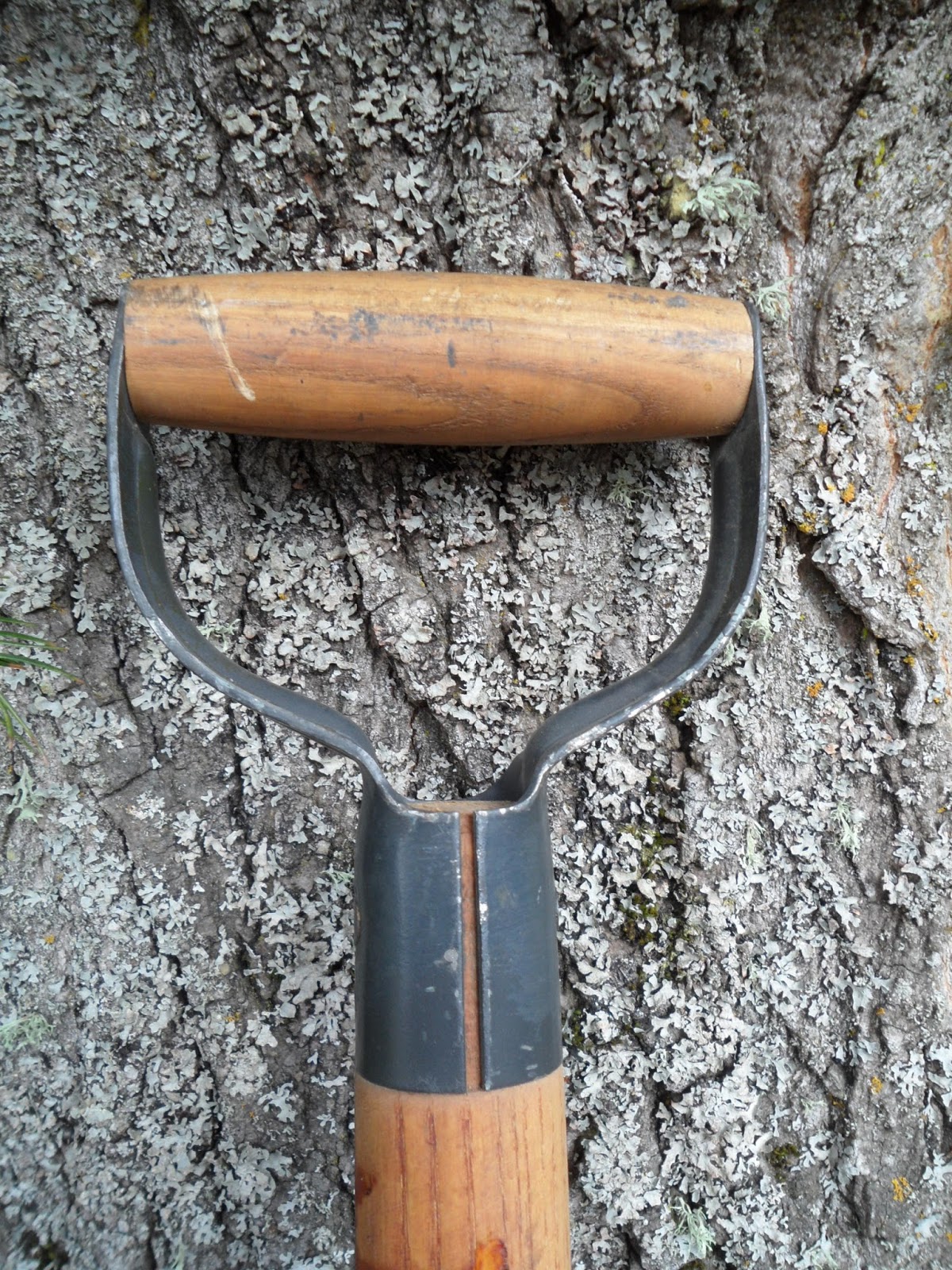
Swiss Army Pioneer Shovel, circa 1943 -1950's, Gschwind & Cie Werkzeugfabrik (Shovel Factory)

Here is the latest addition to the ever growing collection of Pioneer Shovels down in the "Bunker".

Shovel with my WW2 Swiss helmet.

This shovel is an un-issued, Swiss Military, pioneer shovel that most likely dates to the mid-1940's through the 1950's, or early 1960's era.

I picked this shovel up from a military surplus importer here in the US.  These old Swiss shovels are definitely rare, and seldom seen on the surplus market.  When I had the chance to pick one up for "pocket-cash", I jumped on it, and I'm glad I did!

This shovel is in absolute, new and un-issued condition.  It is painted in the old "shadow black" gray color used by the Swiss Military from the 1930's through the 1950's and into the early 1960's (very similar to the old Wehrmacht Field Gray color). In 1960, the Swiss military switched from "shadow black" gray, to a shade of olive green.

Here are two color comparison photos of the shovel next to a 1950's folding entrenching tool and a WW2 dated steel helmet, both Swiss Military.  The gray colors match, with only slight shade variations.

Compared to 1950's Swiss folding entrenching shovel.

Compared to WW2 Swiss steel helmet.

Like most of the the Swiss military equipment of the post-war era, it is not marked with a date.  It is however marked with the manufacturer's name and city, "Gschwind & Cie Werkzeugfabrik, Oberwil BLD."


The original shovel factory was founded in the 1890's, and renamed Gschwind & Cie in 1943.  In 1981, the shovel factory burned down and ceased to manufacture shovels after that date.

Based on the paint color, and the the time period the factory produced shovels using the name Gschwind and Cie, I would date this shovel in the 1940's to 1950's era, and possibly into the early 1960's time frame.  The construction of the shovel fits this time period as well.  The style and size of the shovel fits the "Standard European Pioneer Shovel" dimensions.  So, based on all of those details, we will consider this to be a WW2 to post-war, 1940's - 1950's, Pioneer Shovel from the Swiss Military.  Of course, without a stamped date, we will never know with absolute certainty that I am correct, but I do have a little bit of experience in this department!

These pioneer shovels would have been mounted on the various military vehicles along with an ax, pick and saw.  They also would have been used in the field as "utility shovels".

Without further delay, let's take a look at the photo album of this wonderful, rare, old shovel:


Wednesday, August 3, 2016

Marbles No. 5 Pocket Axe Re-Finished and Blued. Number 5 Pocket Axe

Today's post is a bit of an update to a previous post I made back in March of 2011.  Back in 2011,  I showcased my modern Marbles Number 5, and vintage Marbles No. 6 pocket axes.  Since then, I have revisited the old Number 5 Pocket Axe and did a bit of re-finishing.


I was unhappy with the bright, bare metal finish on the modern No. 5 axe, so I decided that it was time to look into my "patina options".  I have recently been using cold blue paste to touch up, age and restore old tools.  I decided to give it a try on the No. 5.
Here is the link to the Birchwood Casey Blue Paste that I use:

https://www.birchwoodcasey.com/Refinishing/Metal-Finishing/Perma-Blue%C2%AE-Liquid-Paste-Gun-Blue.aspx 

I polished and cleaned up the finish on the head, and folding edge cover, with fine sandpaper and then wiped it all down with isopropyl alcohol (rubbing alcohol).
Then I applied a thick coat of the bluing paste and allowed the metal to darken. After several minutes, I wiped off the paste and applied a second coat.  When the metal had darkened up to a wonderful "gun-metal blued finish", I wiped the metal down, cleaned the finish with another wipe-down of alcohol, and called it good!

I gave the wood a light sanding and then finished and sealed it with two coats of Danish Wood Oil-Finish.

That's it, a "new axe" with a custom finish!
You can see my original blog posting from back in 2011 here:

http://sharky-fourbees.blogspot.com/2011/03/marbles-pocket-axe-no-5-and-no-6.html

Here is the album of the "New Marbles Pocket Axe No. 5".  I hope this inspires some of you to customize your own Pocket Axe or daily chopper!