Today we'll be taking a look at a wonderful little nugget of personal WW2 history.
I am always on the lookout for unique and historically relevant letters, photos and postcards that tell the history of warfare from the perspective of the "man in the trenches". When
I spotted this postcard, I realized it had a great story to tell.
This is a "humorous postcard" that was mailed home by a Private, serving as a firefighter in the US Army Air Force during WW2.
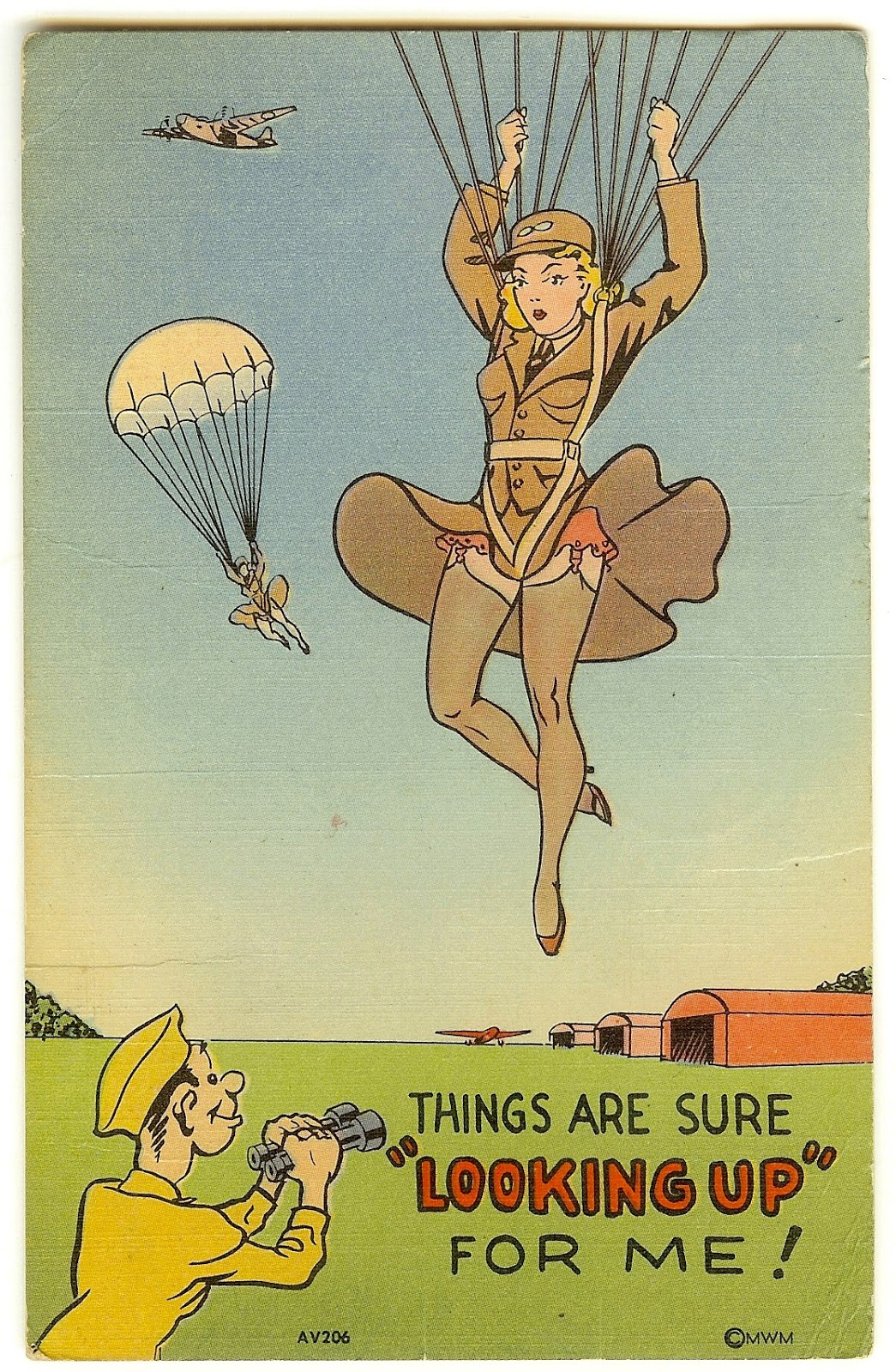
The author of this card was Private S. Makarowitz. According to the return address, Pvt. Makarowitz was assigned to the 2036th Engineering Fire Fighting Platoon, based at Harding Field, Louisiana, USA. The card is postmarked July 24th, 1943.
The 2036th Engineering Fire Fighting Platoon was part of the 385th Bombardment Group, of the US 8th Air Force from 1943 to 1955. Shortly after this post card was mailed, Pvt. Makarowitz's unit was sent overseas to England. They served as the "Crash-Rescue Fire Department" for the 385th Bombardment Group while they were stationed at the Royal Air Force (RAF) Great Ashfield Air Base. The airfield was located near Suffolk, England.
A check of the causality and killed lists for the this unit revealed that Private Makarowitz survived the war.
I will let the photos of this card speak for themselves, however, here is a transcript of the letter's narrative, by Private Sol Makarowitz:
Dear Mr. Fleisher,
I am getting along fine here and everything would be swell here if it wasn't for the temperature which is 120 degrees.
You remember what Squinty(?) said well I think he is all wrong. Of course I would like to be back but it isn't as bad as he said.
I hope you are all well.
Regards to everyone,
Sincerely
Sol
Friday, March 18, 2016
Wednesday, March 16, 2016
East German Rg57 Cleaning kit for AK47, Reinigungsgerät 57, 7.62 x 39 MPi-KM rifle
Today we'll be taking a look at another German rifle cleaning kit. This time it is an East German version of the old Rg34 cleaning kit that dated to the WW2 years.
This cleaning kit was officially designated the Rg57, or Reinigungsgerät 57. It first went into production in 1957 and was intended for the East German version of the AKM, or AK47, better known in East German Army terms as the the 7.62 x 39 MPi-KM.
These Rg57 cleaning kits were manufactured into the 1970's, until the AK74 in the smaller, 5.45 x 39 caliber, was adopted by East Germany. At that time the tin cleaning box was discontinued and the new AK74 tools and brushes were issued in a roll up pouch, without a tin box.
The pouch and kit we are looking at today are one of the late production Rg57 kits. There were slight variations in markings on the tin can lid, and slight tool variations, but essentially they remained the same for the entire time span of their production. Some of the early kits came with a "pleather" - fake leather, pouch that held the tin and its contents. The later versions, like this one, came in a roll out, synthetic backed, cloth envelope with attached drop cloth.
The metal tins are stamped with either RG57 alone, RG57 with a single digit number, or just the single digit number. Mine is marked "1".
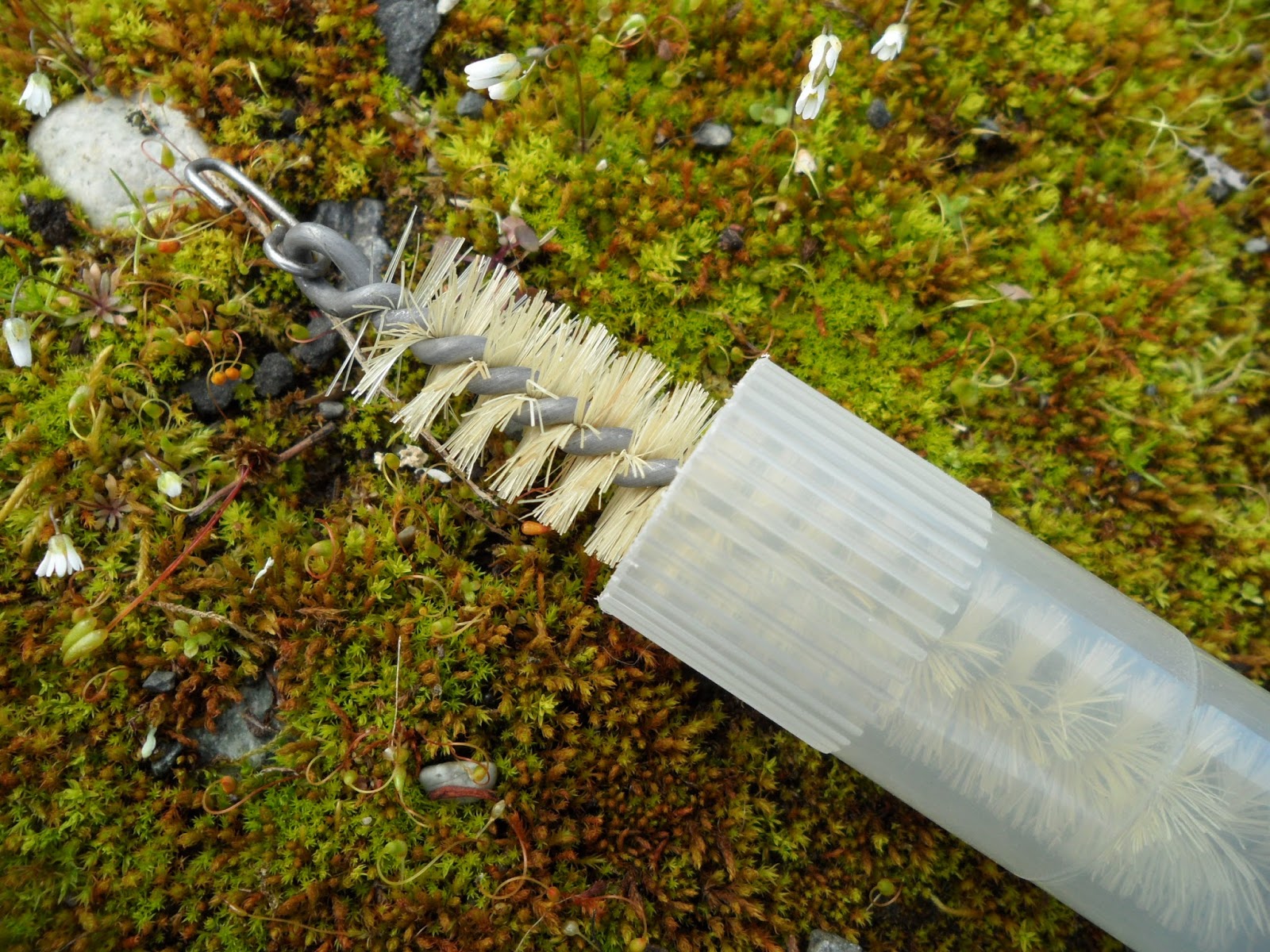
The kits contain a bore brush, chamber brush, small gas port cleaning brush, "broom" brush, combo tool for firearm disassembly, weighted pull cord, and a very cool little metal oil can. The oil can is made of stamped metal with a combination spout - cap. No provision is made for cleaning fluid in these kits, only oil. There is also a plastic tube that holds the bore and gas port brushes so they don't get crushed.
These cleaning kits are quite small and compact compared to the West German Rg34 tins. Here is a comparison of the two.
Here is a link back to the West German Rg34 posting (the larger tin kit): http://sharky-fourbees.blogspot.com/2015/07/west-german-rifle-cleaning-kits.html
Before we jump int the photo album, here is a great photo of some East German Army soldiers cleaning their rifles with these kits. You can see the kits on the table.
Now let's take a look at the album.
This cleaning kit was officially designated the Rg57, or Reinigungsgerät 57. It first went into production in 1957 and was intended for the East German version of the AKM, or AK47, better known in East German Army terms as the the 7.62 x 39 MPi-KM.
These Rg57 cleaning kits were manufactured into the 1970's, until the AK74 in the smaller, 5.45 x 39 caliber, was adopted by East Germany. At that time the tin cleaning box was discontinued and the new AK74 tools and brushes were issued in a roll up pouch, without a tin box.
The pouch and kit we are looking at today are one of the late production Rg57 kits. There were slight variations in markings on the tin can lid, and slight tool variations, but essentially they remained the same for the entire time span of their production. Some of the early kits came with a "pleather" - fake leather, pouch that held the tin and its contents. The later versions, like this one, came in a roll out, synthetic backed, cloth envelope with attached drop cloth.
The metal tins are stamped with either RG57 alone, RG57 with a single digit number, or just the single digit number. Mine is marked "1".
The kits contain a bore brush, chamber brush, small gas port cleaning brush, "broom" brush, combo tool for firearm disassembly, weighted pull cord, and a very cool little metal oil can. The oil can is made of stamped metal with a combination spout - cap. No provision is made for cleaning fluid in these kits, only oil. There is also a plastic tube that holds the bore and gas port brushes so they don't get crushed.
These cleaning kits are quite small and compact compared to the West German Rg34 tins. Here is a comparison of the two.
Here is a link back to the West German Rg34 posting (the larger tin kit): http://sharky-fourbees.blogspot.com/2015/07/west-german-rifle-cleaning-kits.html
Now let's take a look at the album.
Saturday, March 12, 2016
German Rescue Axe - Combo Tool, Ziviler Bevölkerungsschutz - Bundesanstalt Technisches Hilfswerk, ZB - THW - Civil Defense, circa 1961
Today we'll be taking a look at a new addition to the German tool collection. This rescue axe - combo tool, is a seldom seen piece of German Civil Defense and rescue equipment that dates back to the 1960's.
This tool and its leather carrying case last saw recent service with a THW unit in Gemany (Bundesanstalt Technisches Hilfswerk).
Originally it was produced and issued to a unit of the ZB, German Civil Defense (Ziviler Bevölkerungsschutz). The ZB was started in the early 1950's as a new replacement for the old war-time Civil Air Defense Service (Luftschutz). The ZB operated alongside the THW, which handled civil emergencies, disasters and rescues. The ZB was renamed in 1964 as ZS, which was a slight change in the tittle that sounded less "military" in nature. Eventually the ZB / ZS responsibilities were taken over by the THW, Red Cross, and Fire Services.
Today there are still the last remnants of some of the old Civil Defense equipment that still are used here and there, by units of the THW. The blue paint marks on this rescue axe indicate THW use (blue is the organization color for the THW). The tan handle on the Axe is the original uniform and equipment color for the ZB.
Here is a link to one of the THW Berlin units that has some great "action shots & photo galleries". The site is German, but can be translated, or just enjoy the photos.
http://www.thw-treptow.de/
This rescue axe is original, in its issued leather carry case, that is dated 1961, and is stamped ZB. The axe head is stamped ZB.
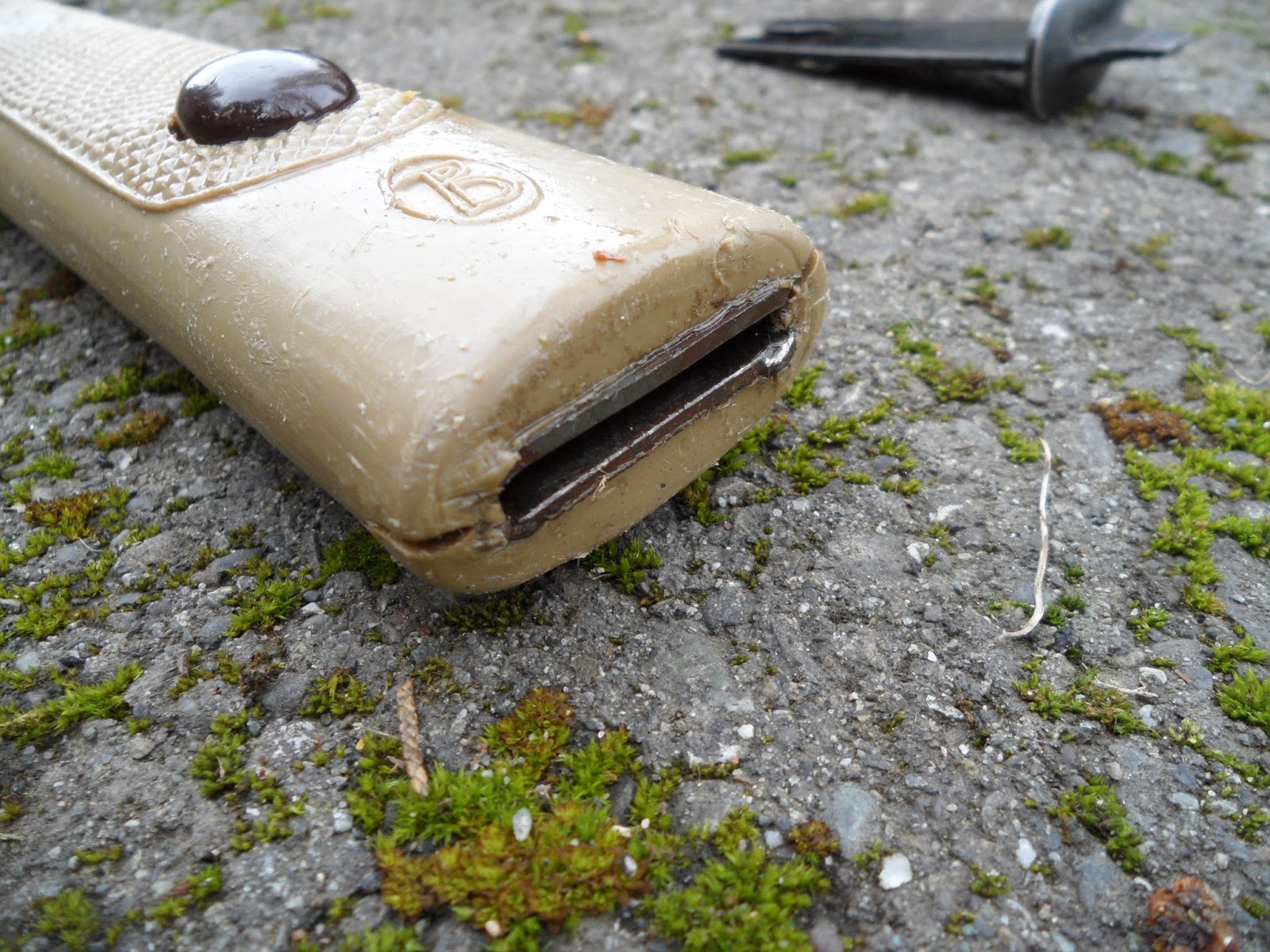
All of the parts nest very compactly in the leather case and can be assembled into different configurations: Axe, Saw, Hoe, or Pick. There is a small "screwdriver" plug that normally fills the slot in the handle when the saw blade is removed. A spring loaded button and internal lug hold the "screw driver" and saw blade in place, when installed.
All in all, this is an amazing piece of rescue gear that is built to last!
NOTE: A good question about weight was asked by one of the blog viewers. The total weight of the tool and attachments, with the leather case and strap, is 5 pounds, 5 ounces.
Let's take a closer look at the photos:
This tool and its leather carrying case last saw recent service with a THW unit in Gemany (Bundesanstalt Technisches Hilfswerk).
Originally it was produced and issued to a unit of the ZB, German Civil Defense (Ziviler Bevölkerungsschutz). The ZB was started in the early 1950's as a new replacement for the old war-time Civil Air Defense Service (Luftschutz). The ZB operated alongside the THW, which handled civil emergencies, disasters and rescues. The ZB was renamed in 1964 as ZS, which was a slight change in the tittle that sounded less "military" in nature. Eventually the ZB / ZS responsibilities were taken over by the THW, Red Cross, and Fire Services.
Today there are still the last remnants of some of the old Civil Defense equipment that still are used here and there, by units of the THW. The blue paint marks on this rescue axe indicate THW use (blue is the organization color for the THW). The tan handle on the Axe is the original uniform and equipment color for the ZB.
Here is a link to one of the THW Berlin units that has some great "action shots & photo galleries". The site is German, but can be translated, or just enjoy the photos.
http://www.thw-treptow.de/
This rescue axe is original, in its issued leather carry case, that is dated 1961, and is stamped ZB. The axe head is stamped ZB.
All of the parts nest very compactly in the leather case and can be assembled into different configurations: Axe, Saw, Hoe, or Pick. There is a small "screwdriver" plug that normally fills the slot in the handle when the saw blade is removed. A spring loaded button and internal lug hold the "screw driver" and saw blade in place, when installed.
| Measuring stick next to Axe for size scale. |
All in all, this is an amazing piece of rescue gear that is built to last!
NOTE: A good question about weight was asked by one of the blog viewers. The total weight of the tool and attachments, with the leather case and strap, is 5 pounds, 5 ounces.
Let's take a closer look at the photos:
Subscribe to:
Posts (Atom)