Monday, June 15, 2015

Romanian - Czech VZ24 Mauser / Mosin Nagant 91/30 Ammo Pouches

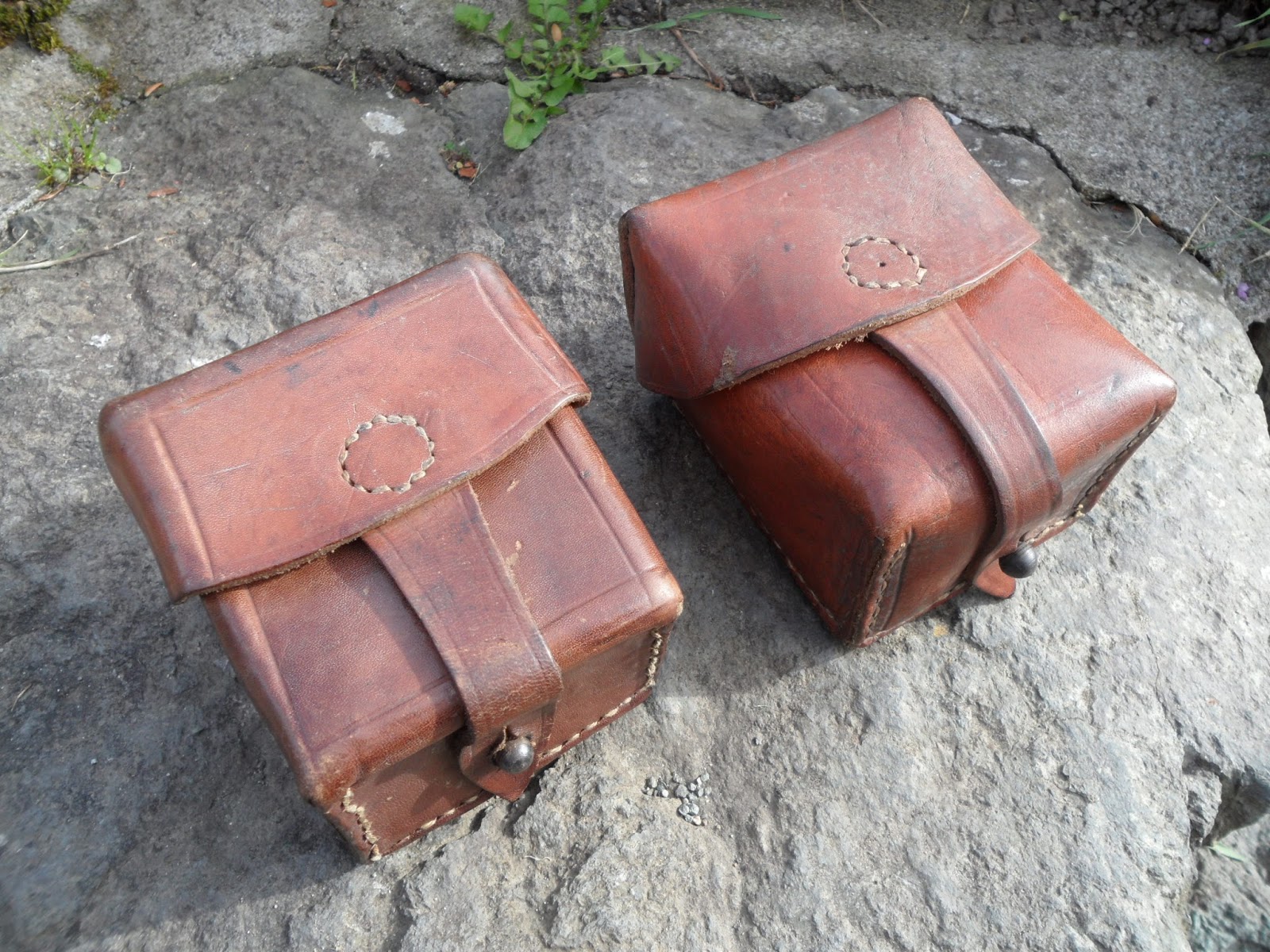
Today I'll be showing a pair of WW2 vintage ammo pouches that I picked up to go with my WW2 Romanian - Czech VZ24 Mauser rifle.  These are tough to find, so hopefully this posting will help you identify any potential Romanian pouches..........


There are a lot of the square style, leather ammo pouches out on the surplus market these days, but most of them are for the Yugoslavian Mausers.  They are very close to the Romanian pouches, but not quite right.

I am not certain of the exact dates of manufacture for the Romanian pouches, but I would guess that they were produced during WW2 when the Romanian Army received their shipment of Czech VZ24 Mausers.  The Romanian VZ24's were manufactured from 1938 to 1942.  I would assume that the bulk of these ammo pouches would have been manufactured at the same time.  There is always the chance that the Romanians manufactured another batch or two after the war to replace the battle worn pouches, but I can find no information about that.  
Romania started issuing the Mosin Nagant M44 Carbine and 91/30 Rifle in 1950, so these older ammo pouches found continued use with the Mosin Nagants of the early Cold War.

The most unique, distinguishing features of the leather Romanian ammo pouches are the flap straps and their attachment stitching.
On the Romanian pouches, the strap attaches under the flap and is sewn on with circular stitching.  The Yugoslavian pouches have the strap on the outside of the flap and they are sewn on with square stitching.  Another distinctive feature is the very square cube shape.  You will often see older Mannlicher Rifle ammo pouches that have the same type of strap and stitching as the Romanian pouches, but the ammo compartment is not cubed, it is slanted like the Cold War, Soviet Mosin Nagant pouches.

There are normally no markings to found on the Romanian pouches, with the exception of a random number or two, here or there, on some pouches.  I have no idea what these numbers might have meant, but I suspect that they had something to do with inspectors marks.   The leather has an embossed "line" set just in from edges of the leather.  You will see this in the photos.


Another thing that you will notice about these pouches is that they are BIG and BULKY!  Each pouch is designed to hold four, 5-round stripper clips of 8mm Mauser ammo.  Each soldier was issued two of these pouches, for a field load of 40 rounds on the belt and another 5 in the rifle!

Romanian 1941

An now, here are some detailed photos of the two pouches in my collection:


Side-By-Side Pouch Photos


Some close up details:


Faint number stamp under the edge of the back belt loop.

Pouches next to an original VZ24 for size comparison.

Sunday, June 14, 2015

1954 French Forces in Germany, Jerry Can, Forces Francaises en Allemagne FFA

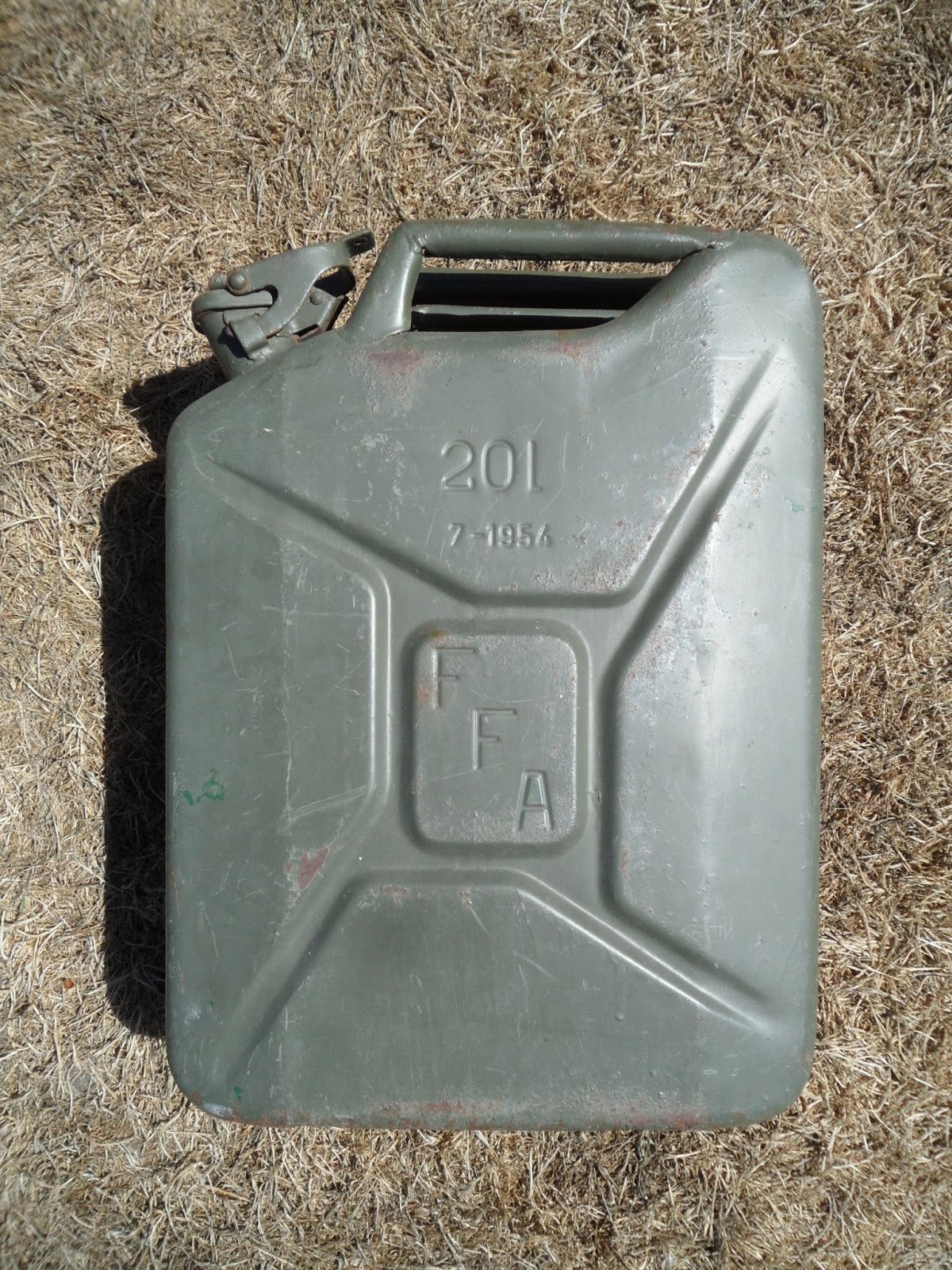
Here is the newest addition to the "Cold War Collection".   A 1954 dated French fuel can, better known as the Jerry Can.


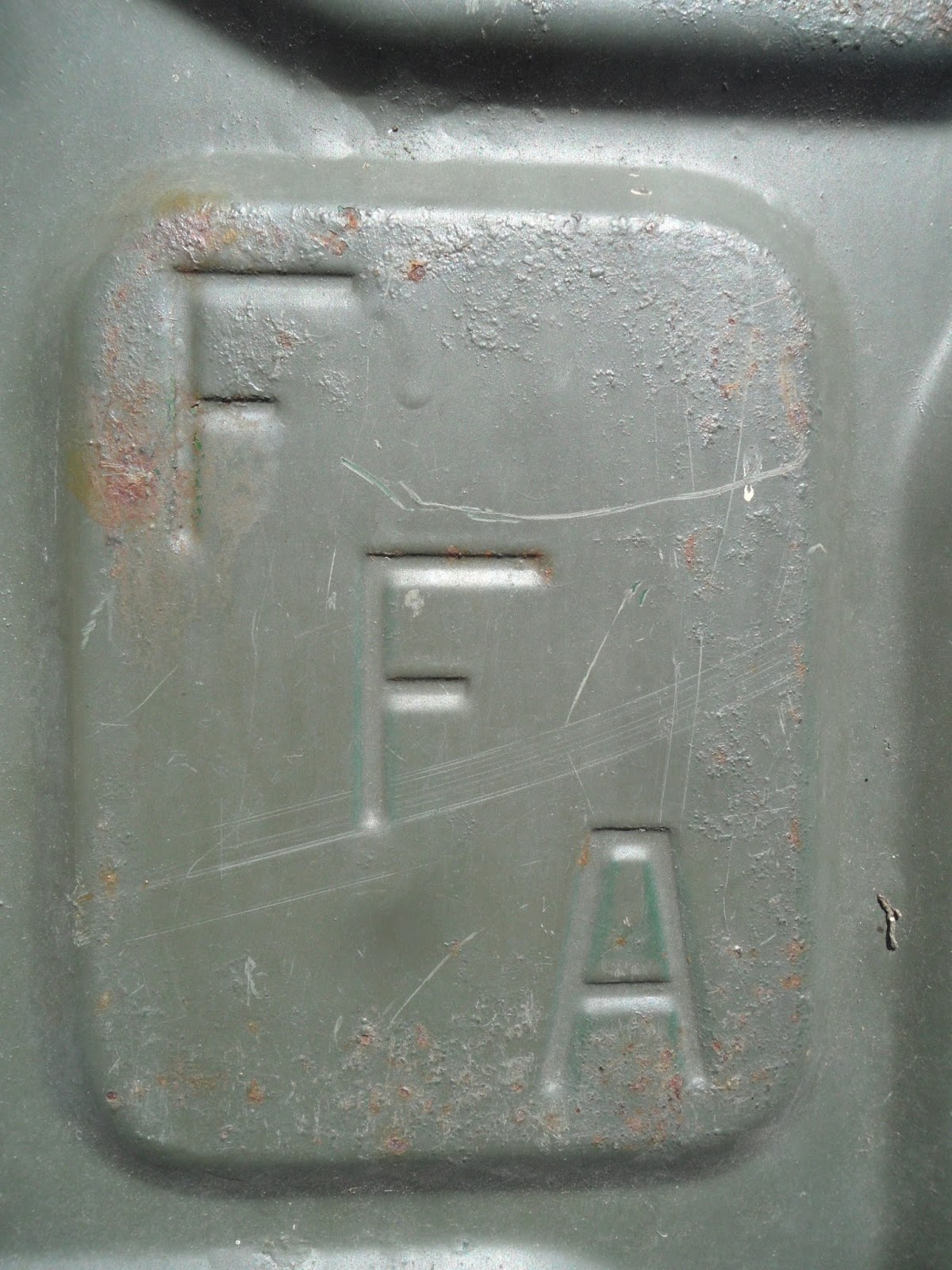
The can is marked "FFA", which stands for "Forces Francaises en Allemagne", or French Forces in Germany as it is written in English.  The FFA replaced the French Occupation Troops in Germany in 1949 and were known as the the FFA until 1993.  After the end of the Cold War, the FFA withdrew or disbanded their military forces in Germany.

Here is an excellent website that details these French Jerry Cans.  It's in French, so beware!

http://s294984131.onlinehome.fr/Jerrican.htm

When I discovered this can at a local yard sale, I thought it might be an old Bundesgrenzschutz can.  I could see the original paint color under the OD Green paint that it was later repainted with.  The color appears to be the old BGS Green.  


Even though the can turned out to be French, it still fits in nicely with my Berlin and West German, Cold War Collection.  The French were stationed and operated in West Berlin and West Germany along with the Bundesgrenzschutz, the US Army and the British Forces.  A very Unique period in post-war history!

1949 at the Brandenburg Gate with German Polizei, US Army , British and French military police.
This can was manufactured in Germany by F & R Fischer, and is marked with a great manufacturer's imprint of "Fischer Original" with two fish.  This manufacturer also made Jerry Cans for the Wehrmacht during WW2 with manufacturer's code of ebn.  The manufacturer date of 7-1954, volume of 20 l,  and FFA, are imprinted on the other side of the can.


No that we have covered a bit of the history of this French-German can, let's take a look at a few more photos.


Friday, June 12, 2015

East German K98 Mauser Ammo Pouch, Post-War Issue, Karabiner 98k Volkspolizei

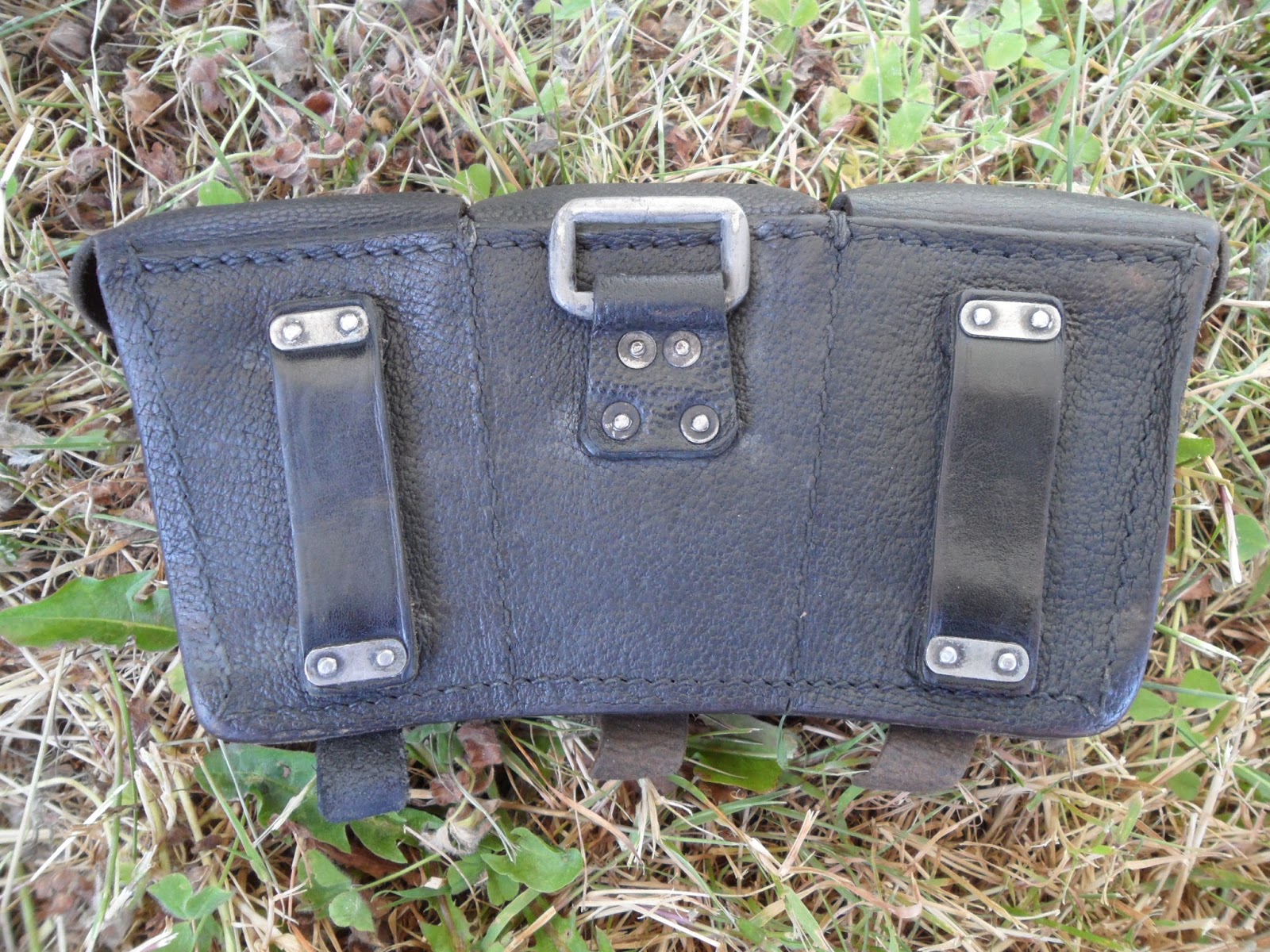
Today I'll be showcasing a very nice, East German K98 leather ammo pouch that I recently added to the collection.


This pouch was a very interesting item to research.  There are no markings and several of the minute details are not consistent with a WW2 issued K98 pouch............ After a month of extensive research and conversations with a number of collectors who specialized in Mauser 98K ammo pouches (Yes, there are collectors who only collect these 3 compartment pouches!), I determined that this pouch is a very early, Post-War, East German Volkspolizei pouch.

Very early Post-War photo of East German Volkspolizei officers carrying the Mauser 98K rifles.  Unfortunately we can not see the ammo pouches!
In the very early Post-War days of East Germany, before they adopted the Soviet weapon systems, the various police and military units of East Germany were issued the old Mauser 98k, bolt action rifles.  New ammo pouches were manufactured to be issued with these rifles.  They were manufactured to the same pattern as the late WW2 issue pouches.  Most of these early East German pouches were never stamped or marked in any way to indicate origin or date of manufacture.  This can really be a problem when it comes to positively identifying an item like this!

This pouch looks identical to the late WW2 produced ammo pouches, with the exception of the leather and thread color.........  The East Germans used pig skin leather, and the old WW2 pouches rarely used any pigskin leather.  The WW2 pouches are usually always stitched with white leather, and the East German pouches are sewn with black thread.  To further complicate things, some of the very late, end-of-war German pouches were unmarked and sewn with black thread!  Luckily I had some very knowledgeable people to consult, who also had a few confirmed early, Post-War, East German pouches I could use as an identification comparison.  My pouch was a match.  I would imagine that there are quite a number of these old East German pouches that are sold and collected as genuine WW2 issue............ it would be a VERY easy assumption and mistake to make!  Interestingly though, these East German pouches are much more rare than their WW2 issue counterparts!

Identification was not the only challenge on this pouch.  When I received the pouch, I noticed that one of the flap straps had been replaced at a very recent time, and was definitely not original or professionally repaired.  The leather was thick and new, smooth cow hide.  It really stood out as NOT being correct, and to top things off, it was the incorrect length and stitched with the incorrect thread.  I was determined to restore the pouch as best I could so that it would appear entirely correct while it was displayed.  One big problem though, where do you find matching East German leather that has worn in to the same degree as the rest of the pouch leather?  Interesting challenge..........

BEFORE RESTORATION:  You can see the incorrect leather flap strap on the far right compartment.

After several months of looking for some sort of old leather item that I could salvage and re-purposed for the repair, I finally found what I was looking for.  An old pair of Danish leather shoes that were destined for the trash.  The leather was not an exact match, but it was pretty darn close, and it was already worn in.  With a little bit of "aging" in my shop, a new strap was fashioned and the incorrect strap replaced.  I used a very similar thread and then "aged" the thread to match the appearance of the rest of the vintage stitching.

The repaired strap looks entirely correct unless you look very close.  The replacement strap is not pig skin like the rest of the original straps, but the surface finish is very close.  Another successful "museum restoration"!

AFTER RESTORATION:  The replacement strap is on the right, original strap on the left.

Each compartment on these pouches is designed to hold two stripper clips of 8mm Mauser ammo.  There is a rawhide divider strip in each compartment to separate the stripper clips and hold them in place.  These dividers are often missing, usually removed after they are surplussed and re-purposed,  I was lucky to have the dividers still in my pouch, and in such great condition!


When storing and displaying my old leather ammo pouches and leather items, I make a solid foam or wood insert-blank to hold the leather in its correct shape.  It vastly improves the display appearance and helps preserve the leather in the correct shape and form.  It's easy to do and highly recommended.


Let's take a closer look at this Post-War East German Pouch......... here's the photo album: